
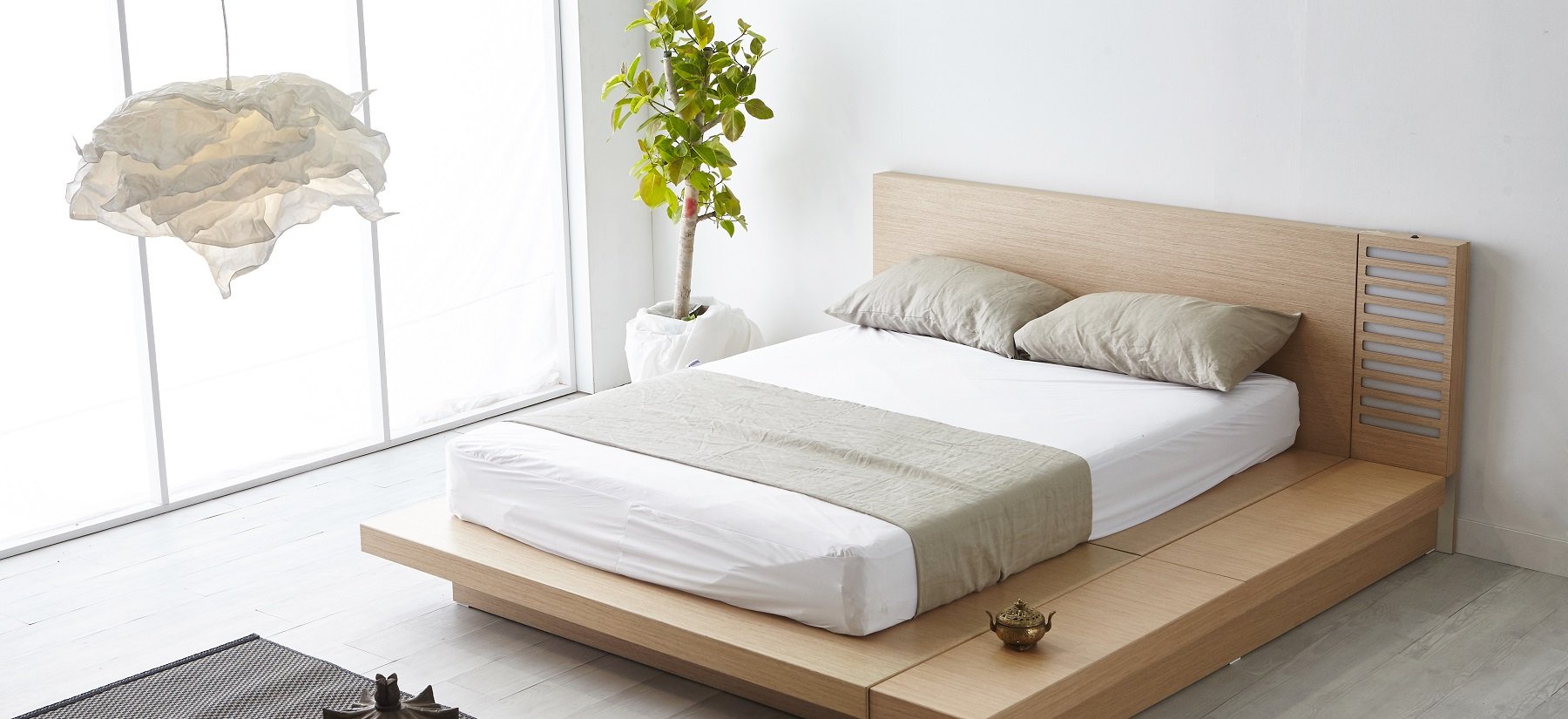
 In today’s marketplace full of brands screaming for attention, MUJI represents the antithesis of consumerism. Founded in 1980, MUJI is a global Japanese retail company selling a wide variety of household consumer items, furniture, clothing, and food products. MUJI is most well-known for its philosophy of functional, quality design with a Japanese minimalistic aesthetic, offered at a reasonable price. The brand’s relentless focus is on the product and does away with any unnecessary decoration or ornamentation. MUJI is obsessed with minimalism, reflected in all its brand elements which embody “Less is More”.
The protest has become an institution. Ryohin Keikaku, the Tokyo-listed company behind MUJI, reported operating revenue of about USD 5.9 billion for fiscal 2026 (year ended August 2026), its third consecutive year of record revenue and profit, with operating profit of about USD 660 million. It runs 1,486 MUJI stores, more than half of them outside Japan, and plans to reach 1,850 by 2029. A brand created as a reaction against brands has become one of Japan’s largest retailers.
That is the central tension of MUJI. The company has no founder at its head, no controlling family and no controlling shareholder, and it has had five presidents since 2001. Its philosophy of removing everything unnecessary now has to survive more than a hundred store openings a year, a return to Europe and the United States, where it has twice retreated, and a Chinese market that is at once its largest abroad and its most competitive.
The question for the next five years is what “no brand” means at that scale. This article examines how the brand was built, how the company rebuilt itself after 2020, and how a business without an owner has guarded a way of thinking across generations of management.
Since the 1950s when brands were born in the age of modern marketing, companies have tried to differentiate themselves from their competitors through branding and identity creation. To succeed in the marketplace today, it is not only mandatory for companies to offer high quality products. In addition to that, a strong brand management practice needs to be in place. Today, it is almost impossible to identify a category leader that does not also embody a certain personality in the marketplace. In comes the Japanese antithesis – MUJI.
When the company launched in 1980, Japan was very brand conscious. Japanese consumers were willing to pay high prices for branded products, and their love of brands sparked the emergence of a mass-luxury market where owning expensive, exclusive products seemed essential rather than aspirational. MUJI’s generic, brand-less and anonymous products were a statement against the excessive labeling and high price tags accompanying luxury goods. While it was popular at the time to buy a brand-name product regardless of its practicality, MUJI had foreseen that a growing segment of the population placed a premium on functionality, affordability and quality over marketing hype, inflated price tags, and status symbols.
Its philosophy of simplicity and universality has indeed seen the company through its entire 45-year history. In 2001, when car companies were rushing to produce the fanciest cars and marketing them as the coolest cars, MUJI partnered with Nissan to launch the 2001 Muji Car 1000 – essentially a Nissan K11 March with no branding, no paintjob, in the absolute basic specifications available. The company’s persistent non-branding effectively became its unique identity.
In a marketplace full of brands screaming for attention from consumers through both online and offline advertisements, MUJI (full name: Mujirushi Ryohin) can be translated to “no brand quality goods”. A retail company originating from Japan which sells a wide variety of household consumer items, furniture, clothing and food products, MUJI is most well-known for its philosophy of functional, quality design with a Japanese minimalistic aesthetic, offered at a reasonable price. The brand turns the focus towards the product and does away with any unnecessary decoration or ornamentation. Everything about the brand, from its minimalistic logo, packaging and store design, embodies “Less is More”. MUJI is also known to be the precedent of the current “Marie Kondo” trend of decluttering and keeping organized.
Launched in 1980 with only 9 household and 31 food products, MUJI started as a product brand within supermarket chain The Seiyu in Japan. Seiyu belonged to the Saison Group of Seiji Tsutsumi, a retailer who was also a poet and a patron of the arts, and who had turned a single department store into one of Japan’s largest retail groups. The brand was conceived as a critique of the very brand culture his department stores sold.
Tsutsumi entrusted it to three creative people rather than to a merchandising department. The graphic designer Ikko Tanaka became its first art director and drew the wordmark still used today. The creative director Kazuko Koike wrote its concept and has sat on its Advisory Board ever since. The interior designer Takashi Sugimoto created the first store in Aoyama in 1983.
The MUJI product range was designed to offer cheap and good quality products and were marketed using the slogan “Lower-priced for a reason”. Wrapped in clear cellophane, with labels of plain brown paper and red writing, the original range focused on ways to save the customer money. While other shops only offered intact, perfect slices of dried shiitake mushrooms and threw the remainder ends away, MUJI decided to package the ends and sell them. While other shops only sold straight spaghetti and threw away the U-shaped ends, MUJI decided to package the U-shaped ends and sell them.
Therefore, the brand is also distinguished by its emphasis on recycling and its avoidance of waste in production and packaging. From its refillable pens, notebooks, bottles to soap dispensers, MUJI is indeed making a loud statement in today’s world of consumerism.
The company has restated its purpose since, without changing its substance. Its strategic plan of the late 2010s placed at the centre the Japanese phrase kanji-ii kurashi, which its then chairman Masaaki Kanai translated as “living as part of a community, simply, conscientiously, and in harmony”. The “second founding” of September 2021 widened that purpose from the individual customer to the communities around its stores. Kazuko Koike describes the constant beneath it all as two principles: subtract what is unnecessary, and extend consideration to the user, the producer and the environment.
Its global expansion journey started in the late 1980s when MUJI participated in an exhibition of Japanese products in London. This sparked great interest from British retailers including Harrods, but the brand declined the partnership citing business culture mismatch. Later, MUJI launched a joint venture with design-focused UK department store Liberty, marking its first foray overseas.
The Regent Street store opened in 1991 and sold well, but the partnership itself did not work. Liberty’s costs were passed into MUJI’s prices, the “inexpensive” half of the concept was lost, and in 1994 Ryohin Keikaku ended the venture to run its own stores.
Its philosophy towards expansion is to be slow and steady – it only opens its second store in a region after the first has proven to be profitable and operational issues have been worked out. Masaaki Kanai gave the reason in 2018: “Our products are long-lasting. We want to ensure that our stores are too.”
Today, the brand has 1,486 MUJI stores (August 2026) in 28 countries and regions, 723 of them in Japan and 763 overseas. Mainland China alone has 433. With operating revenue of about USD 5.9 billion in fiscal 2026, of which 45% came from outside Japan, MUJI carries more than 7,000 items ranging from clothing and household goods to food and even houses, almost all of them under its own name. Every product is designed to be simple, neutral, multi-functional, lasting, and to improve the home experience, from aroma diffusers providing relaxation, to 90-degree socks that don’t slip, to ergonomically designed cushions providing ultimate comfort.
MUJI’s philosophy has been tested twice by the company’s own ambition. Each time, the recovery came from a return to the founding idea.
From Seiyu to Ryohin Keikaku: In 1989 the business was incorporated as Ryohin Keikaku, “the company that plans good products”. It took over the brand from Seiyu in 1990 and listed on the Tokyo Stock Exchange in 1998. The Saison Group that had created it broke up in the early 2000s. Its private label outlived it.
The first crisis, 2000 to 2001: Success bred imitation and complacency. The company expanded fast in the 1990s, quality slipped as the range grew, and Uniqlo and Nitori began to offer comparable goods for less. In 2000 profit fell for the first time since the founding. In 2001 the company recorded its first loss, of about USD 30 million.
Tadamitsu Matsui, president from 2001, found a company in which every store manager worked his own way. “There were 100 ways of doing one thing,” he later said. His answer was to write them down. MUJIGRAM, a manual of 13 volumes and some 2,000 pages, standardised everything from displays to the way a store is cleaned, and employees could propose changes that were then applied in every store. Unprofitable stores were closed, the overseas business turned profitable in 2002 after eleven years of losses, and sales reached a record by 2007.
Global consistency, 2008 to 2018: Masaaki Kanai, president from 2008, had one priority: MUJI should feel the same anywhere in the world. A department set rules for store design, layout and merchandising, staff everywhere received the same training, and the range was not adapted to countries. “I like to say that Muji goods should be like water: of universal appeal,” he wrote in 2018. Under Kanai and his successor Satoru Matsuzaki, president from 2015, the store count abroad caught up with the count at home.
The second crisis, 2019 to 2020: The strains showed in 2019 with the first fall in operating profit in eight years and falling same-store sales in China. Bloomberg captured the price problem in one comparison: a notebook cost USD 3.64 in Shanghai and USD 2.92 in Japan, while Chinese chains sold similar goods for a fraction of either.
Then the pandemic closed every store. The six-month transitional period to August 2020, when the fiscal year end moved from February to August, brought a net loss of about USD 160 million. MUJI U.S.A. filed for Chapter 11 bankruptcy protection on 10 July 2020.
The second founding, 2021 to 2024: Nobuo Domae, who had spent most of his career at Fast Retailing (the owner of Uniqlo) as an aide to Tadashi Yanai, became president on 1 September 2021. He declared the fiscal year that began that month the company’s “second founding”. His 2030 targets of 2,500 stores and sales of about USD 19 billion were the most ambitious in its history, but the substance was a return to the founding idea.
“Support is growing for the expansion of products that sustain the basics of life,” he said in October 2021. Food, daily necessities, larger stores beside supermarkets and lower prices became the strategy. The 2024 targets were missed as China’s lockdowns, a weak yen and higher costs squeezed margins, but the direction held and fiscal 2024 brought record revenue and profit.
The third plan, 2024 to 2029: Satoshi Shimizu, who joined the company in 1996 and ran its East Asia business from 2015, became president on 23 November 2024. Domae moved to chairman and left the board a year later, and Kanai became an adviser. Shimizu replaced the 2030 numbers with three-year rolling plans. The plan announced on 14 October 2026 runs to fiscal 2029 and targets revenue of about USD 8.3 billion, operating profit of about USD 1 billion, 1,850 stores and more than half of sales outside Japan. The company describes it as a shift “from tuning to a grounded challenge”.
MUJI’s no-brand strategy appeals to a unique group of consumers in the market who are tired of consumerism and prefer a refreshing alternative to traditional branded products. With packaging kept to a bare minimum and limited natural colours, its products are aesthetically attractive to customers who prefer unbranded products. This is reflected in its corporate vision to “be natural without name, be simple and be earthly”.
Some of the key brand success factors for MUJI include the following:
Design minimalism: The winning formula of MUJI and the primary reason the brand stands out in the market is its unwavering focus on the product. MUJI designs its entire organization’s operations with the primary focus on the product itself, which leads to waste reduction and an emphasis on recycling.
It examines products through three lenses, as articulated in its three product development priorities: material selection, process streamlining and packaging simplification. MUJI searches worldwide for the most suitable quality raw materials, even materials that are typically discarded by other manufacturing companies. Processes that have no bearing on a product’s quality are eliminated. For instance, if the bleaching process for pulp is omitted, the resulting paper is light beige in color. MUJI realized that this paper can be used for its packaging and labels as there is no additional value in bleaching the paper to turn it white. The resulting paper is remarkably pure, natural and refreshing when combined with its products – a large contrast to the over-embellished products in the marketplace.
In terms of packaging, MUJI uses bulk, standardized packaging to highlight the natural colours and shapes of its products, while at the same time conserving resources and reducing waste. One of MUJI’s huge design successes is the brand’s refillable dispensers for shampoo, soap and lotion. Through ethnographic research, MUJI realized that a common problem faced by consumers was messy bathrooms filled with visual clutter from various product packagings. Through incorporating these findings and its design capabilities, the refillable dispensers were born.
The MUJI design process resists technology for its own sake, and prototype designs are produced on paper rather than computers to discourage unnecessary detail. MUJI’s number one design priority is always how the consumer would use the product, and this influences the manufacturing process. Finishes, lines, and forms are minimized for manufacturing ease.
As a result of this focus placed on product design instead of branding, MUJI’s products became highly sought-after very quickly after its launch and sent shock waves not only through Japan but across the entire world. The discipline has not changed with scale. The wall-mounted CD player that Naoto Fukasawa designed in 1999 is still in production and sits in the collection of the Museum of Modern Art in New York. Fukasawa, serving on the company’s Advisory Board since 2002, describes the aim as design that blends into the background of everyday life.
Personalization through universality: With simplicity and universality at the forefront of its design principle, personalization can easily be applied to its products. Customers can unlock their creativity through personalizing notebooks and gift bags at the free stamp station available in every store, or even personalizing embroidery on fabric tote bags through custom orders.
Each product is akin to a blank canvas, allowing the consumer the flexibility to interpret and bring out his or her individual style in using and designing the final product, thereby expressing their personalities, feelings and thoughts by using MUJI’s products. This effortless and clever design strategy has not only helped solidify MUJI’s brand identity in the market but has also allowed it to strengthen its equity in different market and product segments.
Leverage on digital: Another winning formula is MUJI’s ability to leverage digital in order to serve its customers’ evolving needs. When it discovered that customers often browsed for products on its website before going down to purchase the products in-store, it developed a mobile app named Muji Passport in May 2013 to build a closer relationship with its customers and enhance in-store experiences. MUJI’s Chief Marketing Technology Officer, Kosuke Hamano has expressed that the primary objective of the mobile app is to promote brand communications and drive in-store traffic, versus only using it as another platform to push sales.
Firstly, the app enables customers a convenient platform to search for store and product information and availability in stores. Secondly, the app enables the company to capture clickstream data including purchase trends and activity from the app and connect it with existing point of sale data and other customer data. This in turn allows it to execute more timely, well-targeted and location-specific in-app push notifications of personalized coupons to customers. Customers love this functionality, reflecting a 46% increase in in-store spending post-launch. Thirdly, the app also functions as a customer loyalty card. Customers are rewarded with redeemable points for checking into stores, writing product reviews and making purchases, which they can use on future purchases. Additionally, the app also helped save MUJI millions of dollars from printing traditional flyers.
The app had 2 million monthly active users by 2016. By fiscal 2025 it had 17.5 million active users in Japan, a country of about 124 million people, and in September 2025 it was renamed MUJI App. It has indeed successfully and substantially enhanced the customer experience for MUJI by connecting the digital and offline customer journey, and it tells the company what each neighbourhood buys.
Fair prices and local production: The fourth factor is newer, and it corrects a weakness. For most of its international history MUJI exported a Japanese range at Japanese costs, plus freight and duty. That made it a mid-priced brand at home and an expensive one abroad, and Japanese customers made the same point when inflation returned in 2022. Takuo Nagahara, then head of sales, put it plainly: “People probably had the impression that Muji products might be rather expensive. We’re returning to our original idea, to be close to customers and help their lives.”
Production has since moved to six overseas production management sites in Vietnam, Cambodia, Indonesia, India, Shanghai and Shenzhen, and direct sourcing from factories has lowered costs. Some goods are now made close to where they are sold, such as bath towels in Portugal and chocolate in France. For a brand whose founding slogan was “Lower-priced for a reason”, this is a return rather than a departure.
Minimalism is a style, and styles date. What has kept MUJI relevant for 45 years is an argument about desire. It explains both the brand’s appeal and the limits the company sets on itself.
“This will do”: The company’s own formulation is that MUJI aims to give customers a rational satisfaction, expressed not as “This is what I really want” but as “This will do”. Most brands are built to produce the first sentence. MUJI is built to produce the second, and to make it feel like confidence rather than compromise.
Tadamitsu Matsui drew the operating consequence: “We make only what customers need, not create something that they want.” He added: “Creating desire is not Muji’s practice.” The company grows by being useful in more parts of daily life.
Emptiness as design: Kenya Hara, art director since 2001, has given the philosophy its vocabulary. “Emptiness is the concept I use to explain Muji’s philosophy to the world,” he told Dezeen in 2017. A MUJI product is designed as an empty vessel. It carries no message, so that the person who uses it supplies the meaning.
Hara also warns against the reading the brand most often receives: “Muji is not an answer, Muji is not a trend.” Simplicity is what the products look like – it is not what the brand is for.
Subtraction as discipline: Kazuko Koike’s two principles, subtract and extend consideration, describe a method rather than a taste. Subtraction removes the pattern from the futon, the bleach from the paper and the logo from the shirt, and consideration extends the thinking to the maker and to the environment. The method is what allows the brand to add categories without adding noise. A MUJI hotel room, a MUJI house and a MUJI curry are all recognisable for what has been left out.
For leaders, a philosophy of this kind is both an asset and a constraint. It cannot be copied by imitating the products, and every growth decision has to pass the same test.
Since it launched in Japan, MUJI has always stuck to its roots of providing functional, value-for-money products. As a result, the brand has always enjoyed success from positive consumer perceptions of its beautifully simple, useful and affordable products. It has followed an expansion strategy using the same core principles into other product categories including a café, packaged food items, homes and hotels, and even a campsite.
The brand architecture follows a classic branded house strategy. MUJI is the brand while its businesses, each with a role in the whole, are the following:
MUJI retail store: This is MUJI’s primary brand where it offers all its home products from socks to luggage bags to food items. This represents MUJI’s original offering when it was first founded in 1980. Products are kept affordable and accessible to the mass consumer. As the MUJI brand began to mature in markets, it also started to offer customization services for example the embroidery and essential-oil-making services, and even interior design services.
Household goods were 47% of revenue in fiscal 2025, apparel 36% and food 13%. Skincare, sold beside the pyjamas and storage boxes at prices below USD 20, has roughly doubled in two years. “We don’t think ourselves as a cosmetics company and that has worked in our favor,” Mariko Ohashi, director of household merchandising, told Bloomberg in 2026. “For many people, cosmetics counters are still intimidating. With us, it feels like you are just taking a quick peek.”
Café&Meal MUJI: Café&Meal MUJI is a cafeteria dining concept that aims to cook food as simply as possible to bring out the natural taste of fresh ingredients, amidst a relaxing and clean ambiance. The focus is on the quality of ingredients, as seen in the brand’s 16 Grain Rice, 100% raw sugar and fresh yuzu juice from Kitagawa-Mura. About half of the cafés are now outside Japan.
MUJI Outdoor: As part of MUJI’s sustainability efforts, it operates three campgrounds in Japan across Niigata, Gifu and Gunma, three scenic areas well known for outdoor recreation, occupying a total of approximately 230 hectares of forest. To help customers enjoy the outdoor experience that these campgrounds offer, MUJI provides everything from boats, tents to fishing rods. Outdoor classes taught by the local communities including kayaking and making stone-fired pizza, and a Kids’ Summer Camp are also offered to educate consumers of the natural environment. The first, at Tsunan, opened in 1995, which makes the campsites the oldest MUJI business outside retail.
MUJI HOUSE: MUJI has sold prefabricated houses in Japan since 2004 through MUJI HOUSE, a 60%-owned subsidiary. In August 2017, MUJI launched the Muji Hut in Japan, its brand-new prefabricated house. It is designed to be functional in any landscape, including mountains, oceans and gardens. Retailing for USD 27,000 and measuring 100 square feet, the house includes all the materials and construction costs necessary for assembly.
The larger business is renovation. Since 2012 MUJI HOUSE has renovated more than a thousand apartments in the danchi, Japan’s post-war public housing estates, and most of them are now let to residents under 50 in buildings whose populations had been ageing. The work has widened to whole estates and their shopping streets. It is the clearest expression of the 2021 purpose: a brand that is useful to a community, not only to a customer.
MUJI Hotels: MUJI has opened hotels in Shenzhen, Beijing, and most recently in Ginza, Tokyo on the 6th – 10th floors of Muji Ginza in April 2019. MUJI acknowledges that travel has become a necessary part of the modern consumer’s life and hence seeks to use its hotels to help consumers experience the MUJI philosophy through its products and service. MUJI Hotels offer a pleasant, restful and local stay at a reasonable and affordable price. Every detail, from the texture of the bath towels, to the layout of switches, to the restaurant menus help to create the best possible travel experience for the consumer.
In 2024 the company gathered its hotels, campsites and houses under one business, MUJI STAY. It also added MUJI BASE, century-old houses in rural Japan renovated for stays and booked through Airbnb. “The concept is to build a huge accommodation service,” Hidetomo Nagata, the executive officer responsible, told Bloomberg in 2024. The scale is still small. The point is that a hotel is the one place where a customer lives inside the brand for a night.
Everything is sold under one name, because the name is deliberately empty and can hold a curry, a sofa or a hotel room equally well. The company has no sub-brands, tiers or designer labels. When outside designers work with it, their names do not appear on the products.
The most important change at MUJI since 2020 is a change in what a MUJI store is for. Until the pandemic the typical store was a destination in a city centre or a shopping mall, visited for stationery, storage and the occasional sofa. The second founding set out to make it part of the weekly routine. “We’ll proceed with product lineups and store operations that will encourage weekly shopping visits at the least,” Nobuo Domae said in 2021. Four moves followed.
Food and everyday goods: Food was the lever. Its sales rose 60% in fiscal 2021, when Japanese households stayed at home and bought MUJI’s heat-and-eat curry, and the range widened into frozen food and fresh vegetables. Daily necessities, kitchenware and skincare followed. These categories bring customers back more often than apparel does, and the Japanese business has become more profitable as a result.
The large store beside the supermarket: Where the destination store was a city-centre shop of about 1,000 square metres, the format that now anchors the strategy in Japan is a roadside or suburban store of twice that size, often beside a food supermarket, with the full range under one roof. About 170 of the Japanese stores are now of this kind. MUJI Aeon Mall Kashihara in Nara, opened in March 2025, is the largest MUJI in the world. Not every opening worked. Stores hidden on the second floor of a supermarket did not, Shimizu said in January 2025, because customers did not know they were there.
The small store and the convenience store: At the other end of the scale, the company went where its customers pass every day. MUJI 500, launched in 2022 in and around railway stations in the suburbs of Tokyo and Osaka, sells daily essentials, most of them priced at about USD 3.40 or less. There were 45 of these stores by January 2025, and the format went to China the same year.
Since June 2020 MUJI goods have also been sold in Lawson convenience stores, and from 2022 in all 14,000 of them, in place of some of Lawson’s own items. Sales of the replaced products rose by about a fifth. “We’re realising that the Muji shop doesn’t have to be a one-size-fits-all model,” the executive leading the new formats told Monocle in 2022.
The store as part of the community: The fourth move is the one Masaaki Kanai anticipated in 2018, when he wrote about Japan’s “shutter streets”, the shopping districts of small towns where every store has closed, and wondered whether a MUJI store might revive them. The company now runs a mobile sales bus from its Naoetsu store to places that have no shops, and it holds thousands of local events around its stores every year. For a listed retailer with record profits, this is also a defence of the brand’s licence to operate in a country whose population is shrinking.
Overseas, Asia first: Abroad, the sequence has been deliberate. East and Southeast Asia came first, where the brand was known and the supply chain close, and the West comes last. East Asia now earns a higher margin than Japan. Southeast Asia, with about 100 stores in five countries, is designated the “next profit driver” by 2028. The flagships opened in Bangkok and Ho Chi Minh City in November 2025 carry a localisation that the Kanai era would not have allowed, from coconut-roll snacks in Thailand to motorcycle helmets and raincoats in Vietnam.
MUJI has moved from the high street to the supermarket car park, the station concourse and the convenience-store shelf without becoming ordinary, because the philosophy, not the location, is what customers recognise. Whether that holds at 1,850 stores is the question the final sections address.
MUJI spends very little on classical marketing in the forms of product advertisement or promotion. For most of its history it did no product advertising at all, in line with its minimalistic ethics. Masaaki Kanai called the policy “another pillar of our no-frills philosophy”. That has softened a little. In 2024 the company said it would step up advertising on television and social media in Japan to explain its prices and products.
Its success is attributed to word of mouth, a simple shopping experience, and communicating its anti-brand identity.
Instead of doing storytelling through traditional advertising, MUJI focuses on showing and demonstrating to the masses the thought and philosophy behind its products. It does this through the press and through conducting in-store events and lectures. In 2016, MUJI hosted a talk at its New York City flagship store as part of the release of its clothing line made from recycled textiles. Featuring the textile designer Reiko Sudo, who now sits on the company’s Advisory Board, the event attracted over 100 people to the store. MUJI also supplies products to the Museum of Modern Art in New York City, demonstrating its functionality and artistic value to the masses. Its stores include experience stations like the stamp stations and aroma stations where customers can participate in customizing products, bringing the MUJI concept to life. ATELIER MUJI, the gallery at MUJI Ginza, does the same at the level of ideas.
Besides stores, MUJI also uses its digital platforms to communicate its anti-brand identity. On its website, it communicates its brand philosophy through a series of short 10-second videos showcasing how its products are used in the home and how the products help to simplify and enhance a user’s life. These videos use a characteristic to-the-point, no-frills communication style and approach with only the product benefit explained through video footage of product usage, with minimal music. For example, the video showcasing one of MUJI’s signature products – its wall-mounted CD player – shows how the user can easily operate it simply by inserting the CD and pulling a string, in just a few video frames.
Another digital channel MUJI uses to communicate its brand identity is social media – Facebook, Instagram and X. The brand’s content on social media is similarly designed to be sharp and short, without any gimmicks or humour used.
In addition, MUJI communicates its brand aesthetic through campaigns. In 2003, MUJI ran a print campaign named Horizon, led by Japanese graphic designer Kenya Hara and photographed on the salt flats of Uyuni in Bolivia. Hara described MUJI’s advertising as “not dispatching information from one entity to another, but facilitating the mutual exchange of information. In effect, Muji’s advertising and products offer an empty vessel for the audience to supply the meaning themselves”. This print campaign primarily featured a man in the middle of a vast snowscape against a blue sky. The visual was intended to not include any MUJI product but instead allow users to freely imagine what they feel MUJI to be.
Muji-to-go was another campaign launched in 2014, which showcased a partnership between Japanese airline ANA and MUJI. With a tagline “Family” is a journey. Its memories shape us. How far can we actually go? To the back of the Earth, Muji is with you.”, this campaign focused on the family as a unit that bring happiness to individuals, and how MUJI can accompany them in this journey towards fulfillment.
Another important brand communication tool that MUJI uses is collaboration. MUJI collaborates with many brands in a wide variety of industries in order to further emphasize the brand’s ethos of simplicity, universality, and ability to personalize and customize. Across the years, it has collaborated with the following brands and industries to produce new and innovative products.
The through-line is restraint. MUJI communicates by letting people handle the product, by lending it to designers and institutions whose standing speaks for it, and by saying as little as possible itself. Twenty-two years after Horizon, the brand’s visual language is still in the hands of the same art director.
Today, sustainability in business is a hot topic and is now quickly becoming a must-have hygiene factor for companies that want to resonate with and win the loyalty of its global customers. With an extensive and expanding supply chain that has shifted over two decades from China to Southeast and South Asia, with 320 factories audited by independent third parties, MUJI’s scale of production of various apparel, household goods and food products is large and its impact on the environment cannot be underestimated. MUJI understands this, as evident from its numerous environmental efforts. A brand founded on selling the ends of the shiitake had the principle built in.
MUJI follows 3 manufacturing standards in its product development:
Besides these manufacturing standards, MUJI also focuses its sustainability efforts on projects with the aim of reaching out to and impacting local communities. Its CSR programme of the 2010s, “100 Good Things”, grouped these efforts under five pillars, and most of them continue in some form today:
Think Earth: Under this pillar, MUJI aims to imbue environmental friendliness into its processes, including using reclaimed wool to produce its sweaters, recycling textiles and by-products, and installing solar panels in its distribution center.
Connect with Locals: Under this pillar, MUJI aims to impact local communities through both financial and non-financial means, including launching One Village One Product Projects (OVOP) in developing nations such as Kyrgyzstan, with the aim of creating jobs and stimulating the local economy in these regions. Another initiative is Cotton My Bags, which involves the production of cotton bags at a dedicated sewing plant in Laos, creating job opportunities and leveraging on the highly skilled workers in the area.
Think as Consumers: Under this pillar, MUJI aims to maximize the value that the MUJI brand can bring to consumers. This includes initiatives such as a crib rental program for mothers, and a “Child Chemo House” as a treatment centre for children with cancer, designed with the children’s quality of life in mind.
Prosper with Suppliers: Under this pillar, MUJI seeks to help its suppliers as much as possible through maximizing the economic opportunities they have. For example, Café & Meal MUJI Japan supports local farmers and growers by using their products, including cattle milk from Tochigi, black tea from Okinawa and Tosa Pomelo from Kochi. MUJI is also looking to increase the use of organic cotton in its products as organic cotton is grown in a chemical- and fertilizer-free environment and is hence safer for its suppliers’ employees. In 2016, the Ryohin Keikaku Group became a partner of the Better Work Programme, a collaboration between ILO and the International Finance Corporation (IFC).
Respect Co-Workers: Under this pillar, MUJI aims to provide its employees with the best possible working environment as it believes that happy staff will lead to high efficiency, productivity and high quality design and products. Since 2007, the Ryohin Keikaku company has set up a no overtime policy. Since 2000, the company has started hiring disabled individuals and followed up with a Heartful Project in 2009 with the aim of providing coaching and development to these staff members.
Since 2020 the emphasis has moved from programmes to circularity. ReMUJI, which began in 2015, takes back worn MUJI clothing, re-dyes it and sells it again. In fiscal 2025 the company collected 140 tonnes of clothing and sold close to 90,000 remade garments, and the take-back now extends to plastic storage, skincare bottles and duvets.
MUJI ENERGY, formed in September 2025 with the power company JERA, is to build solar capacity for about a fifth of the Japanese stores’ electricity. The targets are stated plainly: emissions from the company’s own operations halved by 2030 against fiscal 2021, with a supply-chain target set in September 2026. Compared with the fashion groups the ambition is modest. Compared with the brand’s own claim that less is more, it is consistent.
The great Japanese retail brands of MUJI’s generation are family affairs. Uniqlo is the creation of Tadashi Yanai, whose family controls Fast Retailing. Daiso belongs to the family of its founder, Hirotake Yano. Beyond Japan, ZARA has the Ortega family. MUJI has none of this.
It was born inside a family-controlled group, outlived it, and has been owned by the market for almost three decades. Business families tend to assume that a philosophy needs an owner to protect it. How MUJI has kept one for 45 years without an owner is the most useful thing about the case.
Born in a family business, raised without one: MUJI’s first owner was a family. Seiji Tsutsumi was the elder son of Yasujiro Tsutsumi, the railway and property magnate who built the Seibu group. When his father divided the empire in 1964, Seiji received a single department store, while his half-brother Yoshiaki took the railway, the hotels and the land. The two ran their businesses as rivals for the rest of their lives.
Seiji built the Saison Group into a retail and cultural force, and MUJI was one of its creations. By the early 2000s the group had broken up and Ryohin Keikaku was on its own. Its shareholders today are institutions and individuals, and no founder, family or founder-linked investor holds a significant position.
Five presidents, one philosophy: Since 2001 the company has had five presidents: Tadamitsu Matsui, Masaaki Kanai, Satoru Matsuzaki, Nobuo Domae and Satoshi Shimizu. The first three were alumni of Seiyu and the Saison Group. Domae came from the chief competitor and served three years, while Shimizu grew up inside MUJI.
Since November 2025 the board has had no chairman, and five of its nine directors are independent. A family business would call this churn. Yet none of the five changed what the brand stands for.
Where the philosophy lives: MUJI institutionalised its values in people and documents rather than in a bloodline. Three mechanisms carry them.
Together they do for MUJI what a family council, a family constitution and an owner’s veto do for a business family.
Owner, steward and operator: Membership of a business family is permanent, while the roles a family member holds in the enterprise are not. There are three roles: owner, steward on the board, and operator in management. At MUJI the owner role is dispersed among thousands of shareholders, and the operator role changes hands every few years. The steward role, the guardianship of what the enterprise is for, has been given to a standing body of designers and a set of documents.
It is an unusual design, and it works for the reason that stewardship is the foundation of multi-generational success in family business. The people who guard the philosophy are not the people who run the numbers, and they do not leave when a president leaves.
Where the model is exposed: The weakness is the mirror image of the strength. A business family can stop an expansion that threatens the brand with a single conversation. A listed company without an owner has only its board and its culture. In 2019 the company was planning more than 100 American stores by 2025, at a pace its own rule of profitability first should have prevented. The correction came from a new president and a pandemic, not from an owner.
The lesson for business families is to write the philosophy down and to entrust it to a body with authority over values rather than operations, while the founding generation is still there to explain it. MUJI shows that stewardship can be separated from management entirely. In a family, that arrangement holds only where family unity, harmony and cohesion hold among the owners.
Despite MUJI’s success and its ability to amass a cult following of consumers who live and breathe the MUJI philosophy globally, the brand cannot be complacent. Instead, it needs to constantly find ways to evolve its products along with modern lifestyle changes and find more ways to apply the MUJI philosophy in various aspects of the lives of its consumers.
Some of the challenges that MUJI will face in the coming years include the following.
Stay true to the Muji brand’s roots: MUJI must ensure that it always puts and sustains focus on its no-brand identity. In collaborating with the other brands, there may be a risk of brand dilution as consumers may be distracted by the other brands and their unique value propositions and offerings. To mitigate the risk of diluted brand perception towards MUJI, the brand needs to be very strategic in selecting brands that share and embody similar values as MUJI.
MUJI’s continued success will depend on its ability to mirror its philosophy of simplicity into all aspects of its operations. Hence it will be important for the brand to place relentless focus on this. The test today is one of scale rather than of partners. A plan for 1,850 stores by 2029, television advertising in Japan, a MUJI 500 format beside the station and a food range that competes with the supermarket next door all stretch the meaning of “no brand”. At 1,850 stores the company will have to prove, store by store, that it still makes only what customers need.
New market entrants and counterfeits: Given the huge appeal of the minimalistic aesthetic in the modern consumer’s world, it is not surprising that many new competitors have jumped on the bandwagon and set up similar store concepts as MUJI. A few examples of brands which have created similar home goods concept stores boasting minimalistic and functional products are Daiso, Miniso, IUIGA (in Singapore), Nome and OCE (in China). These brands have been expanding globally very rapidly in recent years. Miniso, the most direct of them, had more than 4,000 stores in some 80 markets when it listed in New York in 2020. In Japan, Daiso launched Standard Products in 2021, a chain of plain, well-made household goods at under USD 4 that competes for exactly the customer MUJI 500 was created to win.
Even IKEA, although not a direct competitor in philosophy, can also be considered a competitor – the Swedish brand focuses on offering products with functionality, good organization and style at affordable prices – a proposition that has many overlaps with MUJI’s.
Apart from the threat of new entrants, in MUJI’s second largest market outside of Japan – China – there have been cases of counterfeit stores mimicking both the products and interior design of real MUJI stores. In fact, this started as early as the 2000s – another company with 14 stores had used its name together with the Japanese characters, to sell cheap, colourful and poorly designed products. Counterfeiting is not an uncommon problem for brands to tackle in China as the Republic attempts to overcome its country of origin challenges. This is made worse by the simplicity of MUJI’s products, making it very easy for copycats to manufacture similar items. To combat this challenge, MUJI opened its first Shanghai store in 2005 and created a department to set rules for store design, layout and merchandising, trained all frontline staff and streamlined its operational processes. This not only ensured consistency across all stores, but also sought to firmly communicate and correct the MUJI brand perception in consumers’ minds.
Masaaki Kanai, who took the decision, gave its logic in one sentence: “We couldn’t have a whole country of consumers believing that this was Muji.”
Hence, instead of succumbing to the price competition, MUJI needs to find ways that it can further differentiate itself while staying focused on its brand identity. This could mean investing more on innovation and consumer research to design better products than its competitors.
Global expansion: Revenues outside Japan now contribute about 45% of MUJI’s business. With this growing proportion, it is crucial for MUJI to continue expanding globally. However, this does not come without challenges. The West is where the brand has twice retreated, and the 2029 plan makes it the first priority.
The United States is the harder case. MUJI opened in SoHo in 2007 and took a decade to reach ten stores, by choice. Then it changed pace, with large stores in the most expensive locations in the country and a plan for more than 100 American stores by 2025, selling goods shipped from Asia at prices Americans compared with housewares in big-box chains.
The business lost money for three years before the pandemic closed it, and MUJI U.S.A. filed for Chapter 11 in July 2020. The network shrank to ten stores before openings resumed in August 2026.
“We had been pacing our store openings, but now we are going to press hard on the accelerator to expand our footprint across the entire United States,” Shimizu said in October 2026. The risk is that the second attempt repeats the first. The difference is that the stores will be the large Japanese format, the goods will come from a diversified supply chain, and the pace will be funded from record profits rather than from hope.
Europe has been rebuilt from the bottom. For most of its time there, MUJI grew in stores averaging 300 square metres, known for stationery and storage. They were too small to absorb the cost of importing goods and too narrow to establish the brand as the lifestyle it is in Japan.
“We can’t continue to bleed red ink,” Domae said when the pandemic exposed the model. Loss-making stores were closed, and in April 2024 the British holding company went into administration. The business passed to a new company funded by Ryohin Keikaku, with every store and employee intact.
The new plan is the Japanese model applied to Europe. A store three times the size of its predecessor opened at Bastille in Paris in October 2026, a flagship of more than 2,000 square metres follows on the Rue de Rivoli in late 2026 and another on Oxford Street in 2027, and the company plans about five openings a year across seven countries, with the aim of tripling European revenue by 2030. Takuo Nagahara, who chairs the European board, states the aim without hedging: “We need to establish ourselves as a lifestyle brand and no longer remain confined to the status of a specialist retailer.” The company expects the cost of Europe and the Americas to hold back its margin until 2028.
Going local: While most of MUJI’s products are universal, it is important for the brand to also be sensitive to catering to consumers’ needs in local markets. For example, it took MUJI almost a decade to introduce bedsheets that fit standard Chinese beds, demonstrating the need for the brand to pay more attention to offering products that cater to local needs. In September 2019, it opened its first development office in China with a Consumer Lifestyle team responsible for monitoring local trends. While this is a good start, MUJI also needs to ensure it does the same for the other markets it has expanded to.
It has since done so, and the question has reversed. The company now develops helmets for Vietnam, snacks for Thailand and thicker towels for Europe, and it asks regional store managers to plan their own assortments. The new risk is that a brand whose identity rests on universality becomes a federation of local ranges. The discipline will have to come from the product development process, where every local item still has to pass the test of subtraction.
China and the weight of East Asia: Mainland China is MUJI’s largest market outside Japan, with 433 stores, and East Asia as a whole supplied close to a third of revenue and most of the overseas profit in fiscal 2026. That concentration is a strength while the region grows and a vulnerability when it does not, as the lockdowns of 2022 and the cooling from September 2023 have shown. The company’s answer is to keep opening, to produce locally and to grow Korea, Taiwan and Southeast Asia alongside China, so that no single market decides the result.
Relations between the two countries also reach the brand in ways it does not control. In the winter of 2025 to 2026, a diplomatic dispute sharply reduced Chinese tourism to Japan, on which Japanese retailers had come to rely. A brand that is at once very Japanese and very Chinese in its sales will always need to conduct itself with care in both countries.
Trademark issues and media management: Despite MUJI’s relatively quick global expansion, it had its fair share of trademark issues. When Ryohin Keikaku registered its name in China in 1999, it did so in five classes of goods but not in the class covering textiles. A Hainan company applied for the Chinese characters of Mujirushi Ryohin in that class in 2000, and the mark later passed to Beijing Cottonfield Textile, which sells bedding and towels under the name.
Ryohin Keikaku’s opposition failed at the Supreme People’s Court in 2012. In 2019 the Beijing High People’s Court ruled that MUJI’s use of the characters on textiles infringed the Chinese company’s mark. The lesson for every brand entering a large market is to register the name in every class before the first store opens. With the widespread public attention during these periods, it is critical that MUJI communicates hard facts to the public in a timely manner in order to manage consumer perceptions towards its brand.
Apart from trademark issues, MUJI has also faced the challenge of having fake news reported on its manufacturing processes. In March 2017, state-run China Central Television’s annual consumer rights day show featured MUJI and falsely claimed that the brand was selling food products made in areas of Japan banned from exporting to China due to the Fukushima nuclear disaster in 2011. Although these rumours were dispelled later, there was a significant damage to MUJI’s market share and hence brand equity. For a market that contributes close to a third of the company’s revenue, with the rest of East Asia, MUJI needs to have a solid public relations and communications strategy in place to manage any future media misrepresentations in order to protect its market share.
Putting the customer first: Although MUJI’s customer loyalty app has had a good head start, it will be important for the brand to avoid complacency and assume that they already know the customer. In times of disruption and quickly evolving customer needs, it will become even more important for MUJI to continue keeping a close eye on how its customers interact with the brand in order to design and implement initiatives to further enhance the customer relationship.
Continue to leverage and harness digital: In today’s world of disruptive technologies, it will be critical for MUJI to keep abreast with leading digital capabilities and constantly find ways to better the customer experience. The MUJI App, with 17.5 million active users in Japan, is one of the strongest digital assets in Japanese retail, and the company treats the integration of stores and online as a growth driver.
MUJI has also launched its online store in certain countries like USA and UK. E-commerce has nonetheless been the weaker half of the model. The company was slow online before the pandemic.
In the first half of fiscal 2026, a cyberattack on a logistics contractor halted online orders in Japan for about six weeks and cut domestic online sales by some 40% for the period. A brand that sells through 1,486 stores can absorb such a shock. It is also a reminder that the digital business depends on partners the company does not control.
Looking ahead, artificial intelligence will shape demand forecasting, assortment and the personalisation of the app. A retailer that knows what each neighbourhood buys can put the right 3,000 items in a station store and the right 7,000 in a roadside one.
Succession of the guardians: The company has shown that it can replace presidents without losing itself. It has not yet shown how it will replace the guardians of its philosophy, one of whom has served since 1980. For a brand whose identity is a way of thinking rather than a product, that is the succession that matters, and it deserves the planning a business family gives to the passage of ownership.
The MUJI brand was set up to be all about simple, functional, minimalistic and quality design, and this is reflected in every aspect of the company’s operations, from manufacturing to design to communications. From its retail stores to its hotels and campsites, the anti-brand brand is one of the fastest growing brands from Japan and Asia.
One of the secrets behind MUJI’s success is its ability to offer a consistent design philosophy that consumers can identify with, across its portfolio of brands. By delighting customers in a consistent manner across all touch points – whether through the design of its home products or its café experience – MUJI has created an environment in which it continually exceeds its customers’ expectations.
Building and sustaining a no-brand personality that is consistently relevant and that resonates with the customer base will be one of the main challenges MUJI will face in the coming years in its quest to continue building up the brand equity. MUJI, with its presence in diverse markets, has managed to overcome this challenge of building a relevant and resonant brand personality by focusing on its roots.
The brand’s future looks steady but not smooth sailing. Although MUJI’s brand equity is strong, it needs to be wary of media and news reports on its retail products that may tarnish the brand’s reputation. Although this is a threat to every company, MUJI has faced this issue numerous times in the past years of its global expansion. Hence, it needs to pay extra attention in managing brand perception through public relations.
Brands that successfully withstand economic cycles stay true to their core. Although MUJI has been innovative in the design of its home products and lifestyle experiences, it needs to continuously invest in innovation in order to maintain the focus on its superior design.
The verdict on the years since 2020 is clear. A company that lost money and put its American subsidiary into bankruptcy has become, in six years, a USD 6 billion retailer with record profits, a stronger home market and a diversified supply chain. It did so not by reinventing the brand, but by taking it back to its first principle of usefulness in daily life. The protest brand has become an institution without, so far, becoming ordinary.
Three tests will decide whether that holds:
The company’s history says it finds its way back to that philosophy when it strays. The next five years will show whether it can hold to it while growing faster than it ever has.
For leaders and owner families, the MUJI case offers four lessons.
MUJI was founded on the belief that a product without a brand could be more desirable than a product with one. Forty-five years later it is a global company whose strongest asset is the thing it set out not to have. The task for its leaders is to carry that paradox through the largest expansion in its history, and to keep asking the only question the brand has ever asked of itself: is this necessary?
Follow Martin Roll on LinkedIn >>
About the author: Martin Roll – Global Family Business & Family Office Expert
Read about Uniqlo: Uniqlo – The Strategy Behind The Global Japanese Fast Fashion Retail Brand
Read about Shiseido: Shiseido – The Iconic Asian Cosmetics And Skincare Brand
Read about Aman: Aman – The Strategy Behind The Iconic Asian Luxury Hospitality Brand
Read about ZARA: The Secret of Zara’s Success: A Culture of Customer Co-creation
Read about retail branding: Retail Branding In The New Digital Age
Read about family business: The Stewardship Imperative: How to Build Multi-Generational Success in Family Business
Read about family business: The 3 Pillars of Success in Family Business: Family Unity, Harmony, and Cohesion
Read about family office: What is The Purpose And Value of a Family Office? A Global Overview
Read more: Insights & Articles

Asian Brand Strategy provides key insights and knowledge about the rising Asian brands incl. model frameworks, brand cases and checklists on Asian branding. Download sample chapter.


