
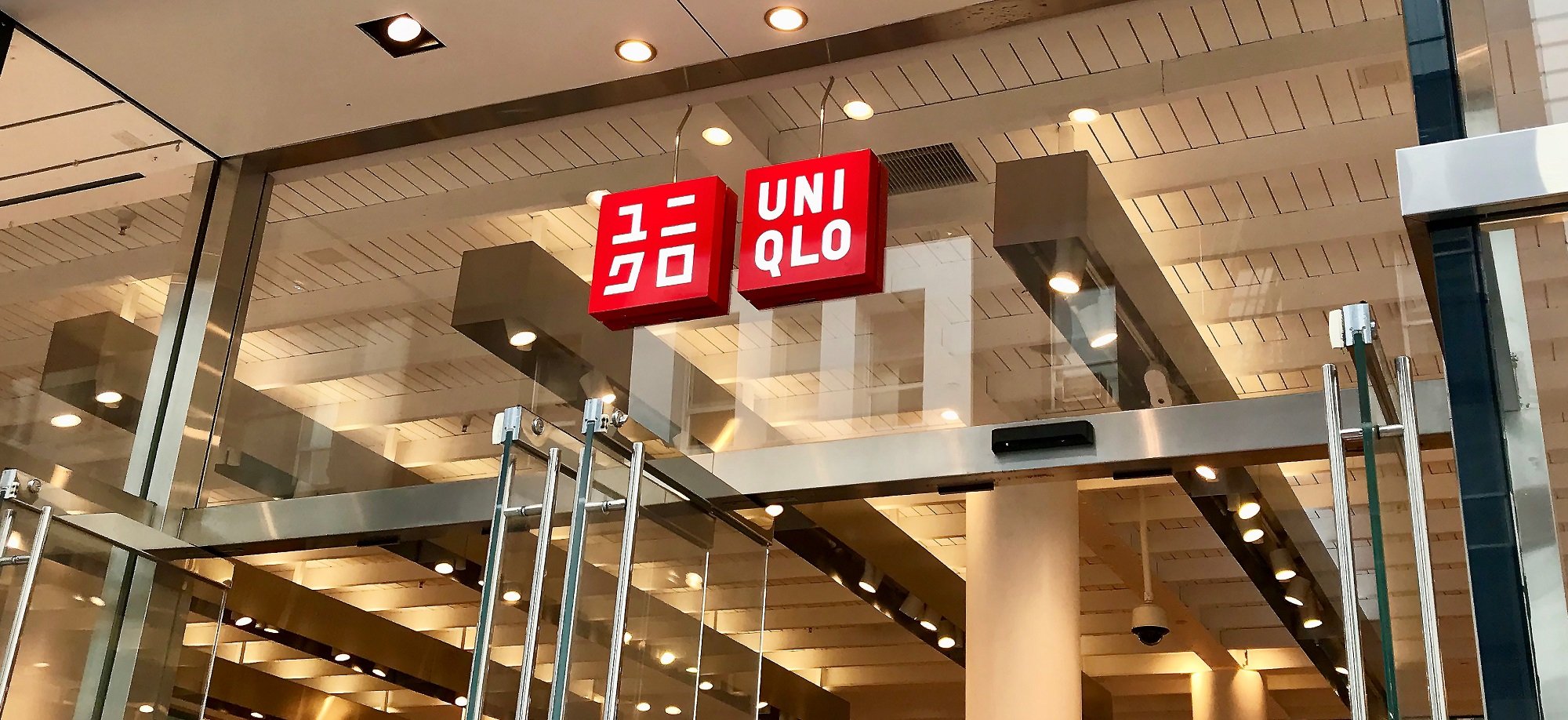
Uniqlo has become one of the largest clothing brands in the world by refusing to behave like a fashion company. In an industry organised around speed and novelty, it sells a narrow range of everyday clothes that are planned a year ahead and improved from season to season. That choice has taken it from a menswear shop in provincial Japan to a place among the three largest apparel retailers in the world. Its hardest test is now internal: the handover from the founder who built it.
Mention the brand Uniqlo 20 years ago to anyone outside of Japan and you would get a confused look. Mention Uniqlo to any global citizen today and the associations of quality, affordability and fashionable come to mind immediately.
That is how successful Uniqlo has become. It has become one of the leading contenders in the global fast fashion retail market. Despite having to compete against other bigger players like ZARA (Inditex), H&M and Gap, earlier challengers like Forever21 and ultra-fast online players such as Shein, Uniqlo has still managed to grow at an astounding pace.
Some of Uniqlo’s key brand success factors include its unwavering commitment to innovation and its company culture. Its founder, Tadashi Yanai, began writing his 23 Management Principles in his thirties, and employees carry them on a pocket card. He calls them the soul of the company: “Without a soul, a company or a person is nothing more than an empty shell.” The essence of these principles includes putting customers first, giving back to society and being self-disruptive.
In 1972, Tadashi Yanai joined Ogori Shoji, his father’s menswear business in Ube, Yamaguchi. In 1984 he became company president and opened a new kind of store in Hiroshima, the Unique Clothing Warehouse, a name later shortened to Uniqlo. By then the business had 22 stores. His appointment marked the start of rapid growth. On visits to Europe and the US he had seen how casual clothing chains such as Benetton and Gap operated, and he concluded that Japan was ready for the same. He moved the family business from suits towards casual clothing, bought in volume at low cost. He also noted that the strongest foreign chains controlled every step from design to production to retail. By 1998, there were more than 300 Uniqlo stores across Japan.
A second-generation business: Uniqlo is usually described as a founder’s creation. It is more accurately a family business rebuilt by its second generation. Tadashi Yanai’s father, Hitoshi Yanai, opened Men’s Shop Ogori Shoji in Ube in March 1949, a month after his son was born, and the family lived above the shop. Tadashi Yanai graduated from Waseda University in 1971, worked briefly for a supermarket chain and joined the family business in August 1972. He became President in September 1984, three months after the first Uniqlo store opened in Hiroshima.
The second generation changed the business model as well as its scale. On a visit to Hong Kong soon after the first store opened, Yanai learned that factories in China could make garments to order, and he moved from selling other labels to selling only his own. The company was renamed Fast Retailing in September 1991 and listed its shares in 1994, which gave it the capital to expand. The opening of the first Tokyo store in Harajuku in November 1998 set off a fleece boom, and Uniqlo sold 26 million fleece jackets in 2000 alone.
The lesson for business families is that the next generation’s most valuable contribution is often to redefine the business, and that the incumbent generation has to give it room to do so. The father ran a local menswear shop. The son used the same company to build a different business. That transition took 12 years, from 1972 to 1984, and it is the reason the company exists in its present form. The same question now returns one generation later, at far greater scale.
The brand’s main problem in those years was how it was seen. Shoppers in and around Tokyo regarded Uniqlo as a suburban discount chain selling cheap clothes of poor quality. The fleece boom of 1998 to 2000 began to change that view. In 2004, the brand issued its Global Quality Declaration, a pledge to stop making low-priced, low-quality garments, and over the following years its image shifted to affordable and high-quality.
Today, Uniqlo is a wholly-owned subsidiary of Fast Retailing Company Limited and it is known for providing high-quality private-label casual-wear at low prices. As of 31 May 2026, the brand has grown to 2,529 stores worldwide – 785 in Japan and 1,744 across Asia, Europe and North America. It is the biggest apparel chain in Asia.
In fiscal 2026 (year ended August 2026), Fast Retailing reported revenues of USD 25 billion, its fifth consecutive record year. The company’s home market Japan contributed just over a quarter of total revenue, while Uniqlo International contributed about 60 percent.
In October 2025, Uniqlo entered Interbrand’s Best Global Brands ranking for the first time, at number 47 with a brand value of USD 17.7 billion. Earlier in 2025 it made its debut in Kantar’s BrandZ ranking of the 100 most valuable global brands. Much of it is credited to its founder’s strategy of innovation and its very customer-centric culture.
Uniqlo aims to be the world’s largest mass clothing retailer. Fast Retailing has set a long-term sales target of about USD 63 billion, some two and a half times its fiscal 2026 revenue. Tadashi Yanai said in October 2026 that the target was “now coming into view”. By sales, Fast Retailing is set to overtake H&M as the world’s second-largest apparel retailer, behind Inditex, the parent company of Zara. The company has set stretching targets before. In 2015 it aimed for sales of USD 50 billion by 2020, a level it has not yet reached. Its targets are best read as statements of intent that set the direction for the organisation.
Uniqlo’s brand message encapsulates a clear vision. It has presented itself as a modern Japanese company that inspires the world to dress casual. The corporate strategy that has worked for Uniqlo so far is to stay away from fashion trends, where its competitors chase them. The brand philosophy “Made for All” positions its clothing to transcend age, gender, ethnicity and all other ways to define people. Contrary to its name “Uniqlo”, its clothes are simple, essential yet universal, enabling the wearers to blend them with their individualistic style.
This design driven clothing brand offers unique functional performance owing to in-house fabric and design innovation. The company distinguishes itself from its price driven competitors by branding its signature innovations with names like HeatTech and AIRism, all under its overarching LifeWear philosophy. Uniqlo provides a superlative physical shopping experience by impeccably managing its stores, inculcating a positive employee culture and through in-store technology like video tutorials that describe product attributes.
LifeWear, and why Uniqlo is not fast fashion: Uniqlo is usually grouped with Zara, H&M and Shein. The comparison is misleading, and the difference is the core of the brand. Fast fashion responds to trends with many designs, made in small batches and renewed at high frequency. Uniqlo plans a narrow range of essentials well in advance and makes each item in very large volumes. It releases about 800 new designs a year, where Zara produces thousands and Shein adds thousands a day. A single Uniqlo T-shirt design can sell a million units.
The economics follow from that choice. Volume concentrated in few items gives Uniqlo scale in fabric, dyeing and sewing, and the standing to develop exclusive materials with its suppliers. Products that do not date stay on the shelf longer and need fewer clearance markdowns. The customer gets better fabric at a given price, and the company protects its margin.
The positioning is deliberate, and the company states it in public. “The Uniqlo brand equals LifeWear,” Tadashi Yanai has said, describing it as casual clothing built on the Japanese values of simplicity, quality and longevity. His son Kazumi Yanai puts it more sharply: “We are misunderstood as a fast fashion brand, we are the opposite.” Yuki Katsuta, the head of research and development, has a shorter version: “We don’t do anything fast.” The clothes are conceived as components that customers combine in their own way, which is why the range is refined each season and not reinvented.
Two caveats belong in a fair assessment. Uniqlo sells clothing in very large quantities, and critics argue that volume on this scale sits uneasily with sustainability. Fast Retailing also owns GU, a lower-priced brand that follows trends more closely. The company’s answer rests on durability, repair and reuse, and on its emissions targets, which are covered below. For brand leaders the implication is that a positioning has to be visible in the operating model. Uniqlo’s is, because the product range, the supply chain and the stores all follow from one choice.
Some of the key brand success factors for Uniqlo include the following:
Delivery system supporting a clear brand promise: Two of the biggest challenges for any brand is to define a clear brand promise and to consistently deliver effectively on its brand promise across all touch points of the customer experience journey. Successful brands are those that create supportive organisational and operational structures that facilitate the implementation of strategies to deliver on the brand promise. Uniqlo has done both. Its promise is well-made, functional, universal casual wear at prices most people can afford, and it has built the delivery system to keep that promise.
The company manages product planning, design, production and distribution itself, while the garments are made by partner factories. This keeps it close to what customers are buying in its stores and limits overproduction and overheads. Stock can be adjusted within weeks and replenished within days. Because the range concentrates on core products in a limited number of fabrics, Uniqlo places very large fabric orders, which strengthens its position with suppliers and lowers prices for customers.
Product development approach and efficient supply chain: Tadashi Yanai is fond of saying: “We are not a fashion company. We are a technology company.” The line describes how the products are made. Uniqlo improves a stable set of items step by step, much as a technology company releases new versions, where fashion retailers start again each season. Zara, its largest competitor, built its business on speed and can move a design from factory to store in about two weeks. Uniqlo plans its core items up to a year ahead. Where competitors offer a wide and changing assortment, it concentrates on a small number of practical styles.
The company also runs a highly robust supply chain. Through development of a detailed marketing strategy by the marketing department for each season, merchandisers are able to adjust production by style to align with demand well in advance. Concept meetings with all key product creation teams are held about a year before a product is launched. Once a garment is in production, staff from Uniqlo’s production offices visit the partner factories every week to ensure quality and resolve outstanding issues.
The Uniqlo production offices are in Shanghai, Ho Chi Minh City, Dhaka, Jakarta and Bengaluru.
Customer concerns are also addressed by the production department which keeps the product teams plugged into what the end consumer thinks, as product and marketing teams work closely together around strategy and execution.
Company culture and visionary leadership: Harvard Business Review ranked Tadashi Yanai number 11 on its 2014 list of the best-performing CEOs in the world. He is credited widely for the huge success and explosive growth of Uniqlo in the past four decades due to his creation of a strong company culture which focused on teamwork and customer experience.
Failure is part of the method. Yanai called his 2003 autobiography One Win and Nine Losses, and the company’s record bears the title out: a food business that was closed, a first attempt in the UK that was largely withdrawn, and a first attempt in the US that lasted a year. “I might look successful but I’ve made many mistakes,” he has said. Each was ended quickly and examined. The discipline is cultural as much as strategic. A company that expects most new ventures to fail tests early, limits the cost and moves on.
Teamwork is supported by a flat structure in which employees are expected to put forward suggestions. The company turns its values and goals into concrete processes and measures that apply in every market. It also manages the store experience closely, down to each point of contact with the customer.
Staff training is a priority, and the standards are detailed. New store staff learn how to fold and stack garments, how to hand a credit card back to a customer with both hands, and six standard phrases for greeting and serving customers.
The company describes its approach as one in which everybody is a manager, and some of its senior executives began their careers on the shop floor. In March 2023, Fast Retailing raised the pay of its employees in Japan by up to 40 percent, a signal that it intends to compete for talent on global terms.
In 2012, Fast Retailing made English its working language for internal business, an unusual step for a Japanese company and a clear statement of its global intent. In addition, Uniqlo employees constantly look to improve their internal processes and consequently the customer experience. In 2004, Uniqlo opened its first large-format store (over 1,600 square metres in size) in Osaka after observing its competitors Zara and H&M do the same. The Uniqlo Customer Center also uses customer feedback to constantly improve its products.
High dedication to innovation: As Peter Drucker said, innovation and marketing are the only two functions of any organisation. Uniqlo understands this well – the brand is well-known for its fabric innovations. The company also hires Japanese textile masters called “Takumi”, who work closely with the partner factories to continually develop new high-tech fabrics for Uniqlo.
HeatTech is the best-known example. Developed with Toray Industries, the Japanese chemical and fibre company, the fabric converts moisture from the body into heat and holds it in tiny air pockets. Because the material is thin, Uniqlo can use it in close-fitting, well-designed garments that have little in common with traditional thermal clothing. The fibre has been improved in successive generations and is now offered in several levels of warmth.
Other branded fabrics include AIRism, a soft and quick-drying material for inner-wear, and UV Cut, which shields the wearer from ultraviolet rays. These innovations all sit under LifeWear, Uniqlo’s overarching concept of simple, high-quality everyday clothing designed to improve people’s lives. Each fabric carries its own trademarked name, which makes the difference visible to the customer and hard for a competitor to match. Uniqlo’s executives often compare the company with Apple, which improves its products in steady steps from one version to the next.
The Toray partnership: The fabric innovations rest on one supplier relationship. Tadashi Yanai first visited Toray Industries in April 2000, and the two companies have worked together since. HeatTech came out of that work in 2003, after some 10,000 prototypes, and 1.5 billion HeatTech garments have been sold. AIRism and Ultra Light Down followed. The partnership is now in its fifth phase, which combines synthetic and natural fibres. The point for leaders is that Uniqlo’s advantage in materials is relational. It was built over 25 years with a partner that shares the development work, and a competitor cannot buy it.
Uniqlo caters apparel to mainly 3 customer segments: Women, Men and Kids & Babies. The range is organised in five categories, and each is anchored by a small number of signature items:
The logic is the same in every category. Uniqlo offers few items, each in many colours and sizes, and improves them from season to season. The customer builds a wardrobe from components that combine easily, and the company concentrates its volume where its fabrics give it an advantage. Alterations are offered in store, so that a standard item can be made to fit the individual.
The Fast Retailing portfolio: Uniqlo is one brand in a group, and the group is run as a portfolio with one dominant asset. Uniqlo generates more than 85 percent of Fast Retailing’s sales. GU, launched in 2006, accounts for less than 10 percent. It offers lower-priced, trend-conscious clothing for younger customers and had more than 480 stores at the end of May 2026, including stores in Hong Kong, Taiwan and the US. The Global Brands segment comprises Theory, PLST, Comptoir des Cotonniers and Princesse tam.tam.
The portfolio shows both the strength and the limit of the model. GU has grown more slowly than Uniqlo and earns a lower margin. In January 2026, Fast Retailing brought in Francesco Risso, formerly creative director of Marni, as the first designer to oversee GU’s entire range. The company’s stated ambition is for GU to follow Uniqlo into every market, once the new concept has proven itself in Japan. The acquired brands have added reach in the US and France without changing the group’s centre of gravity. The lesson is one of discipline. Fast Retailing has put its capital and its best people behind the one brand that can lead globally, and it has kept everything else in a supporting role.
Until the digital age started to gain rapid global momentum, Uniqlo has traditionally relied on marketing flyers and TV commercials as its primary means of advertising. Today, it uses a plethora of methods to communicate its brand position and ideals, including its unique in-store environment, celebrity brand ambassadors (called Uniqlo Global Brand Ambassadors), digital marketing, collaborations with designers and brand campaigns.
In-store environment: One of Uniqlo’s main brand communication methods is its in-store environment. Through its wide aisles, bright lights, neatly stacked shelves and beautifully presented displays creating a comfortable and welcoming shopping experience, Uniqlo communicates its ideal of simplicity and essential basics. Although the brand intentionally limits the number of designs it produces, it compensates for this and distracts consumers from the lack of choice by stacking its apparel from floor to ceiling, creating an illusion of choice and plenitude.
It also has many digital screens in-store explaining the practical benefits of its fabrics and apparels. Compared with other fast fashion competitors whose stores are jam-packed with clothes, lack order and do not have a specific focus on customer service, Uniqlo’s in-store experience stands out and contributes heavily to effective communication of its brand philosophy.
The store remains the brand’s main medium. In 2026, Uniqlo decided to double the number of its flagship stores in Japan to about 20 within a decade. The reasoning is strategic. As more purchases move online, the physical store is where a brand built on fabric and fit can still be experienced.
Uniqlo Global Brand Ambassadors: Similar to many global brands, Uniqlo also uses celebrity endorsements to extend the brand’s image and connect with the masses. For Uniqlo, the most important attributes it looks for in its brand ambassadors are great resilience and strong character to overcome adversity. Uniqlo has appointed nine Global Brand Ambassadors since 2009, starting with Shingo Kunieda.
Its Global Brand Ambassadors have included:
The Uniqlo Global Brand Ambassador partnership is a long-term relationship with the aim of having the ambassador promote the Uniqlo brand and its clothing worldwide, as well as collaborating on future product lines and co-developing functional wear. The Kando Pants were developed with Adam Scott, and a snowboard parka with Ayumu Hirano.
Digital marketing: Being one of the first brands to successfully launch the digital marketing campaign ‘Uniqlock’ back in 2007, Uniqlo is definitely one of the forerunners to use this brand communication channel. The viral marketing project, designed to build brand awareness internationally, featured a clock with spliced clips of well-choreographed dancing and catchy lounge music all timed to match the ticking. It ran all year round – in summer, the girls dancing wore polo shirts; in winter, cashmere; and at midnight they slept.
The web tool, Uniqlock, was designed to include a blog widget so the clock could be embedded into blog sites. By January 2008, more than 27,000 widgets from 76 countries were circulating, and the widgets and website that accompanied the campaign had been viewed 68 million times in 209 different countries. Uniqlock won the brand a multitude of major advertising awards, including a Grand Prix at Cannes Lions Festival. Uniqlo explained at the time that the campaign was all about communicating with customers in a way that travels around the globe.
Later, the brand’s 2019 international campaign #UTPlayYourWorld also followed in Uniqlock’s footsteps, partnering with short-form video giant TikTok to encourage customers to show off their Uniqlo UT range outfits in short videos, which are screened on in-store monitors.
Collaborations with designers: Uniqlo works with designers to give its customers more ways to express an individual style. H&M made the designer collaboration famous, but Uniqlo has used it since 2008, when Alexander Wang designed a five-piece dress collection for the brand. The collaborations also help Uniqlo win attention faster in markets where its brand is less known, such as the US and Europe.
The strategy has since moved from seasonal capsules to embedded creative leadership. British designer Clare Waight Keller, formerly of Givenchy and Chloé, launched the Uniqlo: C line in September 2023 and was appointed Creative Director of Uniqlo in September 2024. She leads the main Uniqlo collection, including menswear, from the Fall/Winter 2024 season.
Here are some notable collaborations that Uniqlo has done over the years:
Global brand campaigns: Although it has been a while since the Uniqlo brand has gone international, it was only in 2016 that Uniqlo launched its first global brand campaign titled “The Science of LifeWear” (Uniqlo has launched local and regional campaigns previously but none were truly global). In the series of videos introducing the brand and its collections (Jeans, Jogger pants, Ultra-Light Down, Knitwear and HeatTech), Japanese streets-capes unwind in slow motion, and people walk on streets wearing simple but chic clothes. A narrator asks why we get dressed, and the films answer through the brand’s products.
This unusual, philosophical way of introducing the brand is edgy and helps solidify Uniqlo’s relentless commitment to quality, functionality and style through LifeWear. Mr John C. Jay, President of Global Creative at Fast Retailing, says that the campaign is an opportunity to present the brand’s mission and its Japanese heritage, which differentiates it from the competition, and to harmonise its brand image internationally. It represents an important next step for Uniqlo in its ongoing mission to become a truly global and inspirational apparel brand. Jay joined in October 2014 with a clear brief: the brand had to carry meaning in people’s lives beyond the quality of its products.
The same idea has since become a live brand platform. On 15 September 2025, Uniqlo marked 20 years of operations in the United States with “The Art and Science of LifeWear”, an event at the Museum of Modern Art in New York held with its technology partner Toray Industries. It presented the technologies behind LifeWear and included a discussion between Clare Waight Keller, Roger Federer and Cate Blanchett.
Partnerships in art and sport: Uniqlo extends the brand through institutions that carry authority of their own. It has design collaborations with the Museum of Modern Art, the Louvre and Tate Modern. In March 2026, it announced a partnership with the Los Angeles Dodgers that puts its name on the field at Dodger Stadium. The pattern is consistent with the ambassador programme: long relationships with partners whose standing does not depend on fashion.
Going forward, the brand wants to foster closer two-way communication with customers. Uniqlo has committed to use the information collected through its website and mobile app to analyse customer data and provide them with information that best suits their individual needs.
Uniqlo’s international record is a study in learning from failure. Its early attempts outside Asia fell short, and the breakthrough in North America and Europe came some two decades after the first stores opened there. Few listed companies would have been given that much time. Fast Retailing had it because its controlling shareholder was also its chief executive.
Three early setbacks: The first stores outside Japan opened in London in 2001. Within two years, 16 of the 21 stores in the UK had closed. In 2005, three stores opened in shopping malls in New Jersey, and all three closed the following year. A further push into suburban malls in the mid-2010s widened losses in the US and was scaled back in 2015. “The U.S. was my biggest failure,” Tadashi Yanai said in 2023.
The flagship principle: The response was to sell the brand before selling the clothes. After seeking the advice of the US retailer Leslie Wexner, Yanai concluded that Uniqlo had to “open flagship stores on high streets around the world”. A global flagship opened in SoHo, New York, in 2006, followed by Fifth Avenue in 2011 and by flagships in London, Paris, Milan and other major cities. A flagship carries the full range, explains the fabrics and establishes what the brand stands for. Smaller stores follow once the brand is understood.
The turnaround in the US: The principle took time to pay off in the US, where the business remained loss-making until fiscal 2022. At the end of 2014, Uniqlo had 39 stores in the country. In 2020, Yanai sent Daisuke Tsukagoshi to lead it. Tsukagoshi closed about ten stores in isolated locations, concentrated on a few major cities and put brand-building ahead of store openings. “Before selling products, we have to convey who we are,” he has said. The company also adjusted its sizing for Western customers and developed products with its design team in New York. On 31 May 2026, Uniqlo had 120 stores in North America. It opened its first stores in Texas in 2024 and has announced openings in Miami and Austin.
Europe: Europe has followed the same sequence with faster results. The company reports that sales there have grown by 30 to 50 percent a year since fiscal 2022. It attributes the growth first to the visibility created by flagship stores and then to a stronger women’s range. Uniqlo had 95 stores in Europe on 31 May 2026, and it opened its largest automated warehouse in the Netherlands in spring 2025 to shorten delivery times.
The result is a different company. In fiscal 2026, Uniqlo’s combined sales in North America and Europe exceeded its sales in Greater China for the first time. Fast Retailing aims for each of the two regions to reach the size of its Japan business, and it plans to open about 40 stores a year across them.
Three lessons stand out for leaders:
That patience is one of the real advantages of family ownership, provided the owner also has the discipline to change course when a model does not work.
Sustainability has moved from being a hot topic to being a hygiene factor for companies that want to resonate with and win the loyalty of its global customers.
Contributing to society is one of Tadashi Yanai’s 23 Management Principles, and the reasoning is practical. In his view a company is only as valuable as what it gives to society, and one that pursues profit alone will not last. The corporate statement, “Changing clothes. Changing conventional wisdom. Change the world.”, expresses the same ambition for all the company’s stakeholders.
Fast Retailing’s sustainability approach and efforts comprise of 6 pillars:
These 6 pillars demonstrate Uniqlo’s commitment to give back to society through various initiatives.
Fast Retailing is a founder-led, family-controlled company, and its next leadership transition is a question of governance as much as of strategy. Tadashi Yanai, born in 1949, has led the company since 1984 and is its Chairman, President and CEO. The company’s shareholder register of 28 February 2026 shows him holding 15.85 percent of the shares, with his sons Kazumi Yanai and Koji Yanai holding 4.68 percent each. Bloomberg puts the combined holding of the founder, his family and their holding companies at 39 percent. The board has a majority of external directors, and its Nomination and Remuneration Advisory Committee is chaired by an external director.
The founder’s role has been divided before: In November 2002, Tadashi Yanai became Chairman and CEO and Genichi Tamatsuka was named President. In September 2005, Tadashi Yanai took back the presidency and has held all three roles since. He explained at the time that Tamatsuka “wanted steady growth, but I want more transformation and growth”. Dividing a founder’s role is one of the most demanding steps in any succession, and the company has first-hand experience of it.
The founder’s timetable has moved: Tadashi Yanai once expected to step back from day-to-day operations by 60, and later spoke of handing over at 65 and at 70. He turned 70 in 2019 and remained in all three roles. In interviews published in January 2026, he said that he did not expect ever to retire fully, that he saw himself eventually as chairman only, and that the company could run without him as chief executive once its leadership team was fully formed.
Management roles: Daisuke Tsukagoshi joined Fast Retailing in 2002 and became CEO of Uniqlo USA in 2020. He was appointed President of UNIQLO CO., LTD. in September 2023 and Chief Operating Officer of Fast Retailing in April 2025, and joined the Fast Retailing board in November 2025.
Family roles: Kazumi Yanai and Koji Yanai have been directors of Fast Retailing since November 2018. Both began their careers outside the group. Kazumi Yanai joined Goldman Sachs in 1997 and Theory in New York in 2004, and Koji Yanai joined Mitsubishi Corporation in 2001. Both also hold executive roles: Kazumi Yanai chairs Theory and Uniqlo USA, and Koji Yanai, who joined Fast Retailing in 2012, has worked in Uniqlo’s global marketing. When the board nominations were announced in October 2018, Tadashi Yanai said the purpose was “to maintain proper governance” and that he had no intention of bringing his sons into top management at that time. He has since ruled out his sons succeeding him as chief executive and has described their task as ensuring sound corporate governance.
Owner, steward, and operator: Membership of a business family is permanent. The roles a family member holds in the enterprise are not. There are three: Owner, steward on the board, and operator in management. Every family enterprise has to decide which of them its members hold, and to say so clearly. At Fast Retailing, the founder has drawn the line at the top executive role. His sons are owners, board members and senior executives, and he has said that neither will succeed him as chief executive. As of October 2026, the company has not publicly named a successor. The design separates family ownership from executive leadership while keeping the family close to the business. It reflects a view of stewardship as the foundation of multi-generational success.
The approach is consistent with a wider movement in Japan. In June 2026, the Ministry of Economy, Trade and Industry published its Family Governance Guidance, which encourages family companies to put their business vision and their policy on share ownership in writing and to share both within the family.
Founders settle this question in different ways. Giorgio Armani set out his succession in his will, through a foundation and a staged sale of a stake in the company. Tadashi Yanai is doing it in his lifetime, in public and in steps.
Three governance questions follow. They apply to every founder-led family enterprise at this stage:
What business families can take from the case is the sequence. The founder set a limit on the family’s executive role, placed the next generation on the board, and then began to share executive authority with a professional manager. The step that remains is the hardest one: a dated plan for the founder’s own roles. Genichi Tamatsuka, the former president, has described the leadership transition as the company’s main risk. The board’s external majority gives Fast Retailing the means to manage that risk in the open.
Despite its huge success so far, Uniqlo faces its own global business challenges. As noted above, the brand takes a very different strategy from its fast fashion competitors like Zara, H&M and Gap. The main strategic questions are set out below.
Differentiation through innovation: It has not been all plain sailing for Uniqlo. Its biggest dilemma is probably brand differentiation as it tries to be “everything for everyone” – a known brand strategy mistake. However, Uniqlo has managed to take the focus off the ubiquity of its products by emphasising its innovations in the fabrics. Although Uniqlo has already made a name for itself in the industry for its innovative fabrics, it needs to treat itself as its biggest competitor and continually think of ways to outdo itself. Innovation is therefore a key factor that will strongly influence the future of the Uniqlo brand.
Focus more on quality, less on price: For Uniqlo to effectively compete and maintain its strategic advantage and differentiation, the focus needs to shift away from price but towards quality. Even though Uniqlo enjoys high levels of appeal, evident by the serpentine queues outside its stores when it launches in new markets, there is still a need for Uniqlo to keep investing in building a strong brand positioning on the quality of its apparels and aggressively communicate this.
The home market: Japan remains the foundation. Uniqlo’s sales there grew again in fiscal 2026, although a weak yen raised the cost of imports. Growth at home now depends on the quality of stores more than on their number. Uniqlo had 785 stores in Japan on 31 May 2026, and the plan to double its flagship stores there is an attempt to lift what each store sells and to renew the brand where it is most familiar.
Leveraging on digital: Fast Retailing continues to pursue its Ariake Project, which aims to transform the apparel retail industry into a new digital consumer retail industry. It is building a supply chain that uses advanced information technology to create seamless links between Fast Retailing and its partner factories, warehouses, and stores worldwide. While this is a commendable digital supply chain effort and reflects how the company has comprehensively thought about how to leverage digital internally, it is also important to remember the customer focus. Today, people of all ages use the Internet and this is transforming the way consumers shop.
The project has produced visible results. Every Uniqlo product carries an RFID tag, which supports stock accuracy and the self-checkout tills in its stores. Since October 2018, Fast Retailing has worked with Daifuku to automate its warehouses, and in November 2019 it added the robotics companies Mujin and Exotec as partners. Managers at every level can see sales and stock by store and by item, and production is adjusted accordingly. This is the operating system behind the LifeWear model. Planned volumes are only safe if demand is read early and stock is moved quickly.
Uniqlo opened its first online store in Japan in October 2000. Since then, it has launched its online stores across its markets. Uniqlo understands that it needs to integrate its physical stores and virtual stores, and create a true omni-channel experience. About 15 percent of Uniqlo’s sales are made online, a lower share than at Zara or H&M, and the company’s own executives describe the online experience as unfinished.
Uniqlo needs to consider the entire online customer journey from pre- to post-purchase, in order to make mobile shopping effortless and enjoyable. In addition, the brand needs to keep using retail analytics to analyse digital consumer patterns and devise strategies to improve its sales in its digital channels.
Next generation ownership: With the intense and multi-faceted technological and business disruptions taking place, leadership in the 21st century will be influenced by constant change, geopolitical volatility, and economic and political uncertainty. As set out above, the next transition at Fast Retailing is a question of governance as much as of management. It calls for a succession plan shared by the board, the family and the management team, and a next generation leadership team with the authority to lead.
Despite Uniqlo’s global reach and product standardisation, it still needs to constantly find new ways to serve local fashion needs and preferences of its consumers across the globe. This will be a challenge for the brand’s leadership in the next decade.
Global competition: By sales, Fast Retailing is on course to pass Sweden’s H&M and become the world’s second-largest apparel retailer, behind Spain’s Inditex (ZARA). It has moved well ahead of America’s Gap, which was long dominant in basic wear. The gap to Inditex has narrowed but remains wide. Competition also comes from online retailers such as Shein, which compete mainly on price and speed. Shein listed its shares in Hong Kong in September 2026. Looking ahead, there is indeed a lot that Uniqlo needs to do to meet its ambitious goal of being the world’s largest apparel retailer, but it is without doubt on track to challenge the global players in the fashion retail industry.
International expansion: When a brand starts to gain popularity in its country and region, the next natural step would be to look to expand globally. This is especially so for Uniqlo, but the brand has met with considerable challenges. For many years, the brand footprint and awareness were relatively low outside of Asia. In its products, notable differences between global customer groups were overlooked and Western consumers often complained about its clothes size and fit to body shape. To tackle this, Uniqlo built partnerships with Western designers like Christophe Lemaire and Clare Waight Keller, and invested in flagship stores in major Western cities.
As described above, that position has changed. The open questions are now different ones: whether the brand can win customers in regional cities beyond the major centres, whether its online business can catch up with its stores, and how it absorbs higher US import tariffs. The company said in January 2026 that it had absorbed the impact of the additional tariffs in its first quarter.
Greater China: Greater China is Uniqlo’s largest market outside Japan and the base of its supply chain, and both roles are changing. Uniqlo had 983 stores there on 31 May 2026, and it has more stores in China than H&M and Zara combined. After two decades of rapid store openings, the regional chief executive, Pan Ning, said in July 2024 that the business was “approaching a turning point”. Revenue and profit declined in fiscal 2025 and returned to growth in fiscal 2026. The company is closing smaller and weaker stores and replacing them with larger ones in better locations, a policy it calls scrap and build.
On the production side, Tadashi Yanai has been clear that the commitment stays. “We, Fast Retailing, have grown together with the Chinese textile industry,” he said in 2024. As of September 2024, 211 of the company’s 397 partner garment factories were in China, followed by 61 in Vietnam and 26 in Bangladesh, and its takumi teams of textile specialists work inside those factories. The strategic point is balance. Sales are spread more evenly than before across Japan, Greater China, the rest of Asia and the West, while production continues to rest on long relationships with a limited number of partners in Asia.
The next sources of growth: North America and Europe will carry the plan for the next five years. Beyond them, Tadashi Yanai named Southeast Asia, Australia and India in October 2026 as a key stage of the company’s next phase of growth. Success in Europe could open the Middle East, Latin America and Africa. Inside the group, the options are the international expansion of GU and a wider range of accessories. Each option raises the question the company has answered well so far: whether it adds to the core proposition or dilutes it.
In terms of non-organic growth, the brand has its own share of acquisition talks. In 2012, Fast Retailing paid USD 290 million for J Brand, a California-based denim firm. In January 2004, it took an equity stake in the company behind Theory, an affordable luxury brand that is one of the group’s Global Brands.
Moving forward, Uniqlo needs to remain very focused in its international expansion strategy with clear and achievable plans tailored to each market.
The Uniqlo brand was set up to be all about the Japanese philosophy of simplicity and essentiality, and this is reflected throughout the brand’s marketing, communications, and operations. It is indeed impressive how Uniqlo has managed to transform from a small inherited chain of men’s tailoring shops in Yamaguchi into a global casual wear giant and one of the most impressive brands from Japan and Asia today. Under Tadashi Yanai’s effective and visionary leadership, Uniqlo’s parent company Fast Retailing targets to become the world’s largest apparel retailer.
One of the secrets behind Uniqlo’s success is its strong delivery system supporting a clear brand promise, and its relentless commitment to innovation. It has defined a clear promise, well-made and functional casual wear at prices most people can afford, and it runs the supply chain needed to keep it.
Building and sustaining a brand that is relevant and one that resonates with the customer base is one of the most difficult aspects of building a strong brand today. Uniqlo, with its presence in diverse markets, has managed to hold up well to this challenge of building a relevant and resonant brand personality.
There are indeed many opportunities that Uniqlo can leverage in order to reach its goal of becoming the largest global apparel retailer. Five consecutive years of record results to fiscal 2026, a growing business in North America and Europe, and a first entry into the Interbrand ranking give the company a strong base to build on.
For leaders and business families, the Uniqlo case offers five lessons:
Uniqlo has earned its place among the leading global brands from Asia. Its next test is one of governance: How Fast Retailing divides the founder’s role, and how the Yanai family organises its ownership for the long term. That will shape the company as much as any new market.
Follow Martin Roll on LinkedIn >>
About the author: Martin Roll – Global Family Business & Family Office Expert
Read about family business: The Stewardship Imperative: How to Build Multi-Generational Success in Family Business
Read about family business: The 3 Pillars of Success in Family Business: Family Unity, Harmony, and Cohesion
Read about family office: What is The Purpose And Value of a Family Office? A Global Overview
Read about Giorgio Armani: Giorgio Armani – The Strategy Behind The Iconic Global Fashion Brand
Read about Prada: Prada – How An Italian Family Business Built An Iconic Luxury Brand
Read about Muji: Muji – The Global Strategy Behind The Japanese No-Brand Brand
Read about ZARA: The Secret of Zara’s Success: A Culture of Customer Co-creation
Read about Forever 21: Forever 21 – Fast Fashion Retail Brand With An Edge
Read about Charles & Keith: Charles & Keith – A Truly Successful Asian Global Fast Fashion Retail Brand
Read more: Insights & Articles
Asian Brand Strategy provides key insights and knowledge about the rising Asian brands incl. model frameworks, brand cases and checklists on Asian branding. Download sample chapter.


