
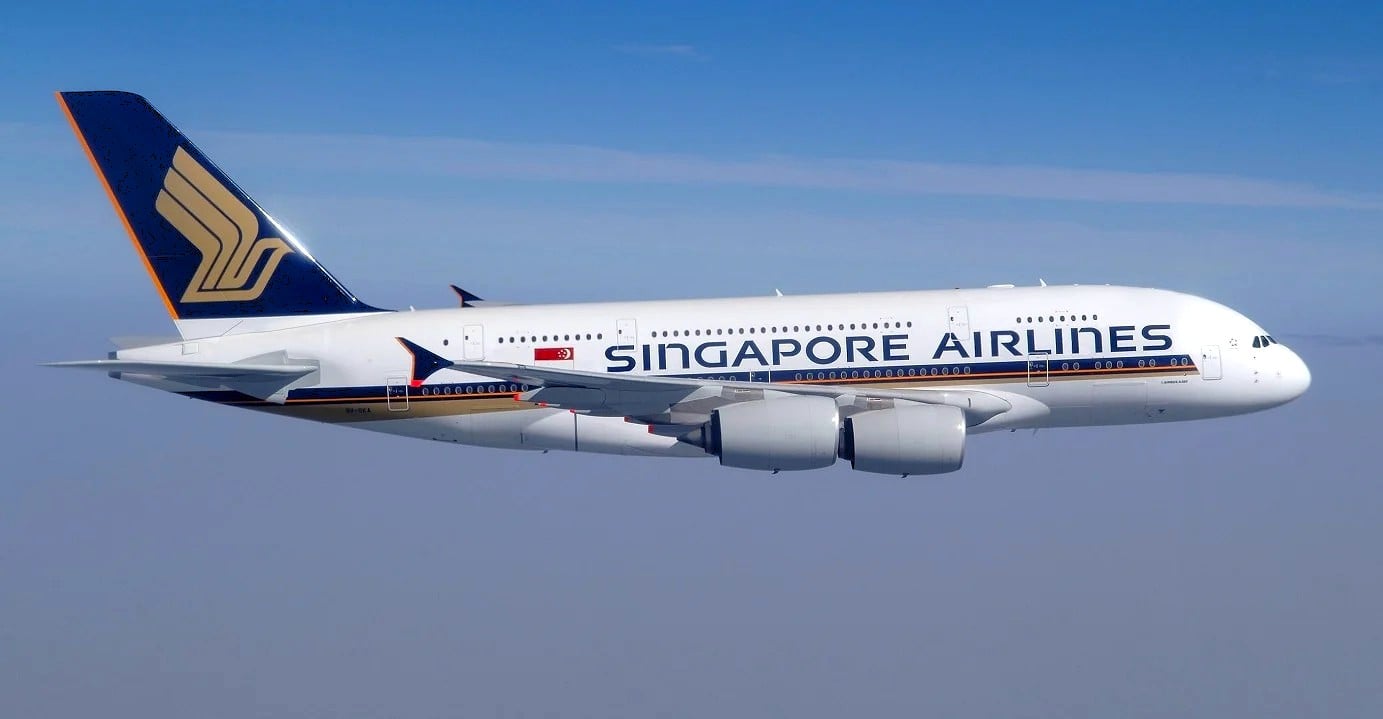
 Think about one of the strongest brands from Asia, and chances are that Singapore Airlines (SIA) and its long-serving, almost iconic Singapore Girl easily come to mind. SIA has consistently been one of the most profitable airlines globally, and has always had the reputation of a trendsetter and industry challenger. There are several good reasons for this. Most relate directly to the strong brand management driven primarily by the SIA boardroom and top-management, and the healthy brand equity as the result of a dedicated, professional brand strategy throughout a diversified, global organisation.
The Singapore Airlines brand has been instrumental for the airline from the early start. It serves as one of the leading brand cases from Asia for other established brands as well as any aspiring brand. The Singapore Airlines brand is unique in the sense that the boardroom takes dedicated leadership of the brand strategy unlike many other Asian companies.
The brand’s standing has rarely been higher, and its strategic agenda has rarely been more demanding. In September 2026, Singapore Airlines was named World’s Best Airline at the Skytrax World Airline Awards. In fiscal 2025/26 (year ended 31 March 2026), the SIA Group reported record revenue, a record number of passengers and an operating profit up 39 percent. At the same time, the airline is carrying the losses of a 25.1 percent stake in Air India, has had to push the entry into service of its next generation of cabins back to 2027, and faces Gulf and Chinese carriers adding capacity across its core markets while jet fuel prices have more than doubled since the start of the conflict in the Middle East. How a board with more than five decades of brand discipline handles that combination is the question this article addresses. It is a question any owner of a premium brand will recognise.
A case in point for such leadership is the Skytrax World Airline Awards, which rest on a survey of more than 24 million travellers and are the industry’s most closely watched ranking. On 18 September 2026, Singapore Airlines was named World’s Best Airline for 2026, ahead of Qatar Airways and Cathay Pacific, and it also took the awards for World’s Best Economy Class, World’s Best Economy Class Onboard Catering and Best Airline in Asia. It was the sixth time the airline had won the top award, after 2004, 2007, 2008, 2018 and 2023. Few brands in any industry have stayed at the top of their category for that long.
Furthermore, Singapore Airlines was Asia’s first and the world’s third airline that has been accredited by IATA (International Air Transport Association) with the IOSA (IATA Operations Safety Audit).
The maiden flight of Malayan Airways Limited (MAL) took off from Kallang Airport in Singapore to Kuala Lumpur, Ipoh and Penang on 1 May 1947.
In 1966, the Governments of Malaysia and Singapore acquired a joint majority control of the company and the airline changed its name from MAL to Malaysia-Singapore Airlines (MSA) in the following year.
In 1968, French couturier Pierre Balmain designed the legendary sarong kebaya uniform for MSA stewardesses, made with traditional Asian batik design and created to represent Malayan culture and hospitality.
The differences in operating outlook and priorities between the Malaysian and Singapore governments led to a mutual agreement to set up separate airlines. In October 1972, MSA split into Malaysian Airline System (MAS) and Singapore Airlines (SIA), and the Singapore Girl icon was created.
Singapore Airlines was in a different position than most other airlines at the time. As there were no domestic routes to serve, it was forced to immediately start competing with international airlines for routes, getting access to airports, securing flight slots and landing rights. In addition, it had to attract a customer base of international travellers, and locals who needed to travel internationally – as opposed to most other carriers which started out by servicing the needs of their domestic travel market. When it was trying to establish itself as the best airline amongst competing giants, the code SQ was chosen to represent ‘Superior Quality’ of service that the company aspired to deliver. Unlike most state-owned entities, Singapore Airlines was subject to heavy competition from the onset – this tough start created a driving spirit to compete and a dedication to branding, especially in the boardroom.
These factors have prevailed within the SIA organization since then, and served the airline very well as this brand case will illustrate.
Singapore Airlines moved into the new Changi Airport which opened in 1981. It launched KrisWorld, an advanced in-flight entertainment system, across all classes in 1995. It was the first airline in the world to fly the Airbus A380 in 2007, the world’s largest airplane and the aircraft which were bound to take over the role of Boeing 747 – one of the most legendary aircraft in modern aviation.
As at 31 March 2026, the SIA Group’s passenger network covered 134 destinations in 35 countries and territories, with Singapore Airlines serving 77 of them and Scoot 82. The SIA Group includes Singapore Airlines, Scoot (low-cost carrier launched in 2012), and Singapore Airlines Cargo. It also launched SilkAir as a regional airline in 1989 and Tradewinds Tours and Travel as a tour-operating arm but wound them down as separate businesses post-pandemic. It also has code-share, strategic alliance, and joint venture partners under the global airline partnerships, and under the Star Alliance network. Singapore Airlines has also launched myKrisWorld, the first personalized in-flight entertainment system across all classes in 2018.
Singapore Airlines is about 50 percent owned by Singapore state investment firm Temasek Holdings, directly and through a subsidiary, and is listed on the Singapore Exchange. The ownership and governance model is discussed after the milestones below, as it explains much of what follows.
Singapore Airlines is a listed company, but it is not an ordinary one. Temasek Holdings, the Singapore state investment company, holds about half of its shares, directly and through a subsidiary, and the airline is accounted for as a Temasek subsidiary. The remaining shares trade on the Singapore Exchange. The structure has been stable for decades, and it explains much of what makes the brand possible: an owner with a long horizon, a board that treats the brand as a strategic asset rather than a marketing line, and a management team that has grown up inside the company.
Temasek is a patient owner, but it is not a passive one, and it is careful to keep its distance from operating decisions. When the Air India investment drew public debate in Singapore in 2026, Temasek stated that it viewed the airline’s decision from a long-term perspective and supported it, while the government made clear that investment decisions belonged to the SIA board and that the airline funds its investments from its own balance sheet. The division of roles is explicit. The owner sets expectations and takes the long view; the board decides; management executes.
The board has been chaired by Peter Seah Lim Huat since January 2017, and the company has been led by Goh Choon Phong, who joined Singapore Airlines in 1990 and became Chief Executive Officer on 1 January 2011. Fifteen years in the role is rare in an industry known for short tenures, and the continuity shows. The three pillars the airline uses to describe its brand promise today – service excellence, product leadership and network connectivity – are the same drivers that have defined it since 1972, restated for a new generation of travellers.
Owner, steward and operator: For business families, Singapore Airlines is an instructive case precisely because it is not a family company. The three roles that every multi-generational family enterprise has to fill are visible here in unusually clean form. Temasek is the owner: it provides patient capital, sets the expectation of responsible, long-term decisions and refrains from running the business. The board is the steward: it holds the brand, approves the capital allocation framework and carries the long-term strategy through cycles that punish short-term reactions. Management is the operator: it delivers the promise every day, from the training academy to the cabin. The lesson for an owner family is not that the state makes a good shareholder. It is that clarity about who owns, who stewards and who operates is what allows a brand to stay consistent for five decades while the industry around it changes completely. The article on The Stewardship Imperative: How to Build Multi-Generational Success in Family Business sets out how families build the same clarity.
Two further features of the model deserve the attention of any owner. The first is funding discipline. Singapore Airlines finances its fleet, its cabin products and its overseas investments from its own operating cash flow and balance sheet, under what it calls a disciplined capital allocation framework, and it has said that its investments in India will continue to be funded that way. The owner is not a lender of last resort. The second is the willingness to accept volatility in reported earnings in exchange for strategic position. A family that holds an operating company through a holding structure or a family office faces the same choice every time a long-term investment depresses this year’s profit. The article on What is The Purpose And Value of a Family Office? A Global Overview discusses how families organise ownership for exactly that kind of patience.
Singapore Airlines decided on a fully branded product/service differentiation strategy from the very beginning. Innovation, best technology, genuine quality and excellent customer experience were to become the major drivers of the brand.
Innovation: Throughout the course of their more than 50-year history, Singapore Airlines has remained true to their brand attributes. They have pioneered many in-flight experiential and entertainment innovations and strived to be best-in-class. SIA was the first to introduce a choice of meals, free alcoholic and non-alcoholic beverages, free headphones, hot towels with a unique scent, personal entertainment systems, and video-on-demand in all cabins. In recent years, they have further differentiated the brand experience through various in-flight perks. One of them is Book the Cook, in which passengers can choose their favourite gourmet main course from a tantalising selection of dishes prepared by Singapore Airlines’ International Culinary Panel before their flight. SIA has also collaborated with Michelin-starred chefs and restaurants to offer gourmet dining experiences in the sky.
The company keeps driving innovation as an important part of the brand, and the cabin ambiance and combined experience are key factors of their success.
Customer Experience and Quality: Some of the main customer experience strategies used by Singapore Airlines to deliver the best-in-class flying experience include searching for familiar flavours to make its passengers feel at home. Its menu includes authentic premium jasmine tea from Fujian, green tea from Japan, and masala from Assam. Singapore Airlines menus are also specially created to reflect culinary influences of the regions it flies to. In addition, Singapore Airlines takes care to ensure that its certified Air Sommeliers, each equipped with detailed knowledge of wine appreciation, are available in-flight to advise passengers on the art of food and wine pairing.
Singapore Airlines’ attention to detail is also reflected in the way its SilverKris Lounges are designed for ultimate comfort – spacious living rooms and private corners are available for rest and relaxation, and productivity pods are available for passengers to work in.
Singapore Airlines also keeps to its strategy of constantly being the first in the world to continually introduce improvements to the brand experience. In October 2006, it introduced the world’s widest First and Business Class seats which transform into fully-flat beds. This particular innovation took the world by storm as comfort in air travel has never been taken to such an extent before. In February 2013, it was the first airline in the world to introduce 3D games on its entertainment system, KrisWorld. In 2017, Singapore Airlines launched the Suites cabin class, the first in the world product which promised a “personal oasis” within a private space, exclusively on board the A380s. The 2026 Skytrax awards for World’s Best Economy Class and World’s Best Economy Class Onboard Catering are a reminder that the attention to detail runs through the whole aircraft, from the Suites to the last row of Economy.
Technology: On the technology side, Singapore Airlines still maintains one of the youngest fleets of aircraft amongst all major air carriers, and keeps to the stringent policy of replacing older aircraft for newer and fuel-efficient models. They have always been first in line to take delivery of new aircraft types like Boeing 747 jumbo jets, Boeing 777, and they were the first airline to fly the Airbus Super jumbo A380 in 2007. In 2018, Singapore Airlines was the launch customer of the Airbus A350-900 Ultra Long Range, which had a range of 9,700 nautical miles or 20 hours non-stop flight. In the earlier years, the aircraft were sub-branded 747-Megatop and 777-Jubilee to further distinguish SIA and its brand from competitors.
Singapore Airlines and British Airways launched the Concorde service between London and Singapore via Bahrain on 9 Dec 1977, the first of its kind. This supersonic service was suspended after 6 flights as a result of environmental objections from the Malaysian government. The Concorde service was restored on 24 January 1979. However, rising costs such as fuel, en route navigation and landing charges forced SIA and BA to terminate the service with its last flight on 1 Nov 1980. The aircraft was painted with SIA’s colours and logos on one side, and BA’s on the other, and it carried crew from both airlines.
Today, passengers board the planes via aerobridges. In the early days, passengers boarded the planes via a passenger step. Hence, it was a marketing scoop that when passengers boarded the Concorde via the passenger step on the port, they could see SIA’s colours and logos painted on the aircraft’s vertical fin, and BA’s on the starboard.
Keeping in line with its strategy to pioneer the best technology, Singapore Airlines was also the first airline in the world to fly the Airbus A380 on 25 October 2007, between Singapore and Sydney, Australia. Marred by almost a year and a half in delay, this first A380 flight, named flight number SQ380, garnered tremendous amount of worldwide publicity. It further helped SIA’s brand image that all revenue generated from the 455 passengers on board this first flight was donated to three charities in a ceremony the next day in Sydney. Subsequently, SIA flew the A380 to London, Tokyo, New York, Hong Kong, and to many other global destinations as Airbus delivered the full order of the A380 fleet.
The strategy behind the technology program is clear: Using the latest aircraft enhances cost efficiency and allows SIA to use these events for marketing purposes. An example of this was the new non-stop services from Singapore to Los Angeles and New York launched in 2004, which attracted huge publicity in global media as it was the world’s longest non-stop flight and kept the innovation promise of the brand alive. The special aircraft for these long-range routes (Airbus 340-500) were sub-branded with meaningful names (e.g. Leadership) to further distinguish the brand promise. Due to rising fuel costs, the direct route to Los Angeles was terminated 20 October 2013, and the direct route to New York was terminated 23 November 2013.
The 16,700 km, 19-hour Singapore-New York route was re-launched again on 11 October 2018 on the airline’s brand new, fuel-efficient Airbus A350-900 Ultra Long Range. With 67 business class seats and 94 premium economy class seats, the airline designed the flight route for business travellers needing additional comfort on the long route. The flight is scheduled to leave Singapore before midnight and arrive in New York early the next morning, for business travellers to be well-rested for a full day of work, demonstrating its customer centricity. The commercial logic of the ultra-long-haul flights goes beyond publicity. Non-stop services let a full-service airline carry its most valuable passengers over the top of the mega-hubs in the Gulf and China, where connecting itineraries are sold at prices SIA cannot match, and keep those customers inside its own network. That is why the Singapore–New York route has no economy cabin at all.
Singapore Airlines recognizes that each innovation has a relatively short life span. Once other airlines adopt it, it is no longer considered “innovative”. Therefore, SIA continues to invest heavily in R&D, innovation and technology as an integrated part of the business strategy to further differentiate itself. This includes the setup of KrisLab in 2019, which is Singapore Airlines’ digital innovation lab. The purpose of KrisLab is in line with Singapore Airlines’ Digital Innovation Blueprint to develop and nurture the digital aviation and travel technology community. This initiative also acts as a collaborative workspace for SIA employees to innovate ideas amongst themselves, or with external partners to enable the airline to innovate on the digital front.
Product leadership is the pillar under the most pressure, because the competition has caught up. In November 2024, Singapore Airlines announced a programme worth about USD 870 million to fit all-new cabins in all four classes to 41 Airbus A350-900 long-haul and ultra-long-range aircraft, with the work carried out by its own SIA Engineering Company in Singapore and completion targeted for the end of 2030. The new First and Business Class seats were designed for the Boeing 777-9, which was due to join the fleet from 2021 and is still awaited; rather than wait longer, the airline moved the products onto the A350s. On 6 May 2026, it confirmed that the first retrofitted aircraft would enter service in the first quarter of 2027 instead of the second quarter of 2026, citing industry-wide supply chain constraints and a delay in the certification of one of the new seats. The complete travel experience – cabins, dining, a next-generation KrisWorld entertainment system and new amenities – is to be unveiled towards the end of 2026.
The seven ultra-long-range A350s will gain a four-seat First Class cabin for the first time, alongside 70 Business Class and 58 Premium Economy seats, which moves the world’s longest flights further up-market. Starlink satellite broadband is to be introduced on selected aircraft from 2027, timed with the retrofit. And 31 Boeing 777-9s remain on order, the largest item in an order book of 65 aircraft as at May 2026, with the same premium cabins specified for them.
A year’s delay on a flagship product is a brand issue as much as an engineering one. Qatar Airways, Cathay Pacific and several European and US carriers are investing heavily in new premium cabins, and the Skytrax award for World’s Best Business Class went to Qatar Airways for the thirteenth time in 2026. Singapore Airlines’ answer has been to hold its standard rather than rush a product it cannot yet certify, which is consistent with how the airline has always behaved. The test comes in 2027.
Digital and data: The investment in technology has moved from the cabin to the systems behind it. KrisFlyer, the loyalty programme, reached 11.8 million members at 31 March 2026, up 15 percent in a year, and the group reported more than 550 generative AI use cases identified and over 140 implemented across the business. The airline describes its digital capability as one of the foundations of its resilience in a volatile market, and it is careful to add that technology will not replace the human touch the brand is known for. For a service brand, that is the right order of priorities.
Safety and trust: The brand rests on a safety culture that is among the most respected in the industry, and the airline’s handling of its most serious incident in recent years showed the same discipline. On 21 May 2024, flight SQ321 from London to Singapore encountered severe turbulence over Myanmar and diverted to Bangkok; one passenger died and dozens were injured. Singapore’s Transport Safety Investigation Bureau published its final report in May 2026, concluding that a failure of the aircraft’s weather radar could not be ruled out. The airline apologised, strengthened its turbulence procedures and retrained its crews on weather radar and turbulence management. A premium brand is judged as much on how it responds when something goes wrong as on how it performs when all goes well.
Today, sustainability in business is a hot topic and is now quickly becoming a must-have hygiene factor for companies that want to resonate with and win the loyalty of its global customers. Singapore Airlines understands this, evident from its numerous sustainability efforts. In December 2019, it set up a dedicated Sustainability Office with the purpose of reviewing all aspects of its operations and coordinating long-term sustainability initiatives across SIA’s business units.
The SIA Group has committed to net zero carbon emissions by 2050, in line with the goal adopted by IATA for the industry. In November 2023, it set an interim target for sustainable aviation fuel (SAF) to make up 5 percent of the group’s total fuel requirements by 2030, and it has since signed offtake agreements with SAF producers in the United States and Europe and works with the Civil Aviation Authority of Singapore on supply at the Singapore hub. The levers are the familiar ones – new-generation aircraft, SAF and operational efficiency – and the airline’s policy of flying one of the youngest fleets in the world is as much a sustainability strategy as a cost one.
Singapore Airlines also believes in eco-efficiency from the ground up. It was the first airline globally to fly the Airbus A380, one of the world’s most eco-efficient aircraft. It has also built its long-haul fleet around the Airbus A350-900 and Boeing 787-10, which are made from lightweight carbon composites which are more fuel-efficient, and has 31 Boeing 777-9s on order. To reduce energy usage, it also uses renewable energy in its operations and solar panels on its buildings. To minimize food wastage, SIA leverages customer surveys, data analytics and staff feedback to better understand customer food preferences. To minimize paper usage, it digitalized in-flight operations and offered digital publications from the SIA mobile app’s e-Library.
In addition, Singapore Airlines also gives back to society in various other ways, including sponsoring arts, education and sports institutions and initiatives.
Singapore Airlines has 155 aircraft in its own fleet as at 31 March 2026 – 148 passenger aircraft and seven freighters – and the SIA Group, including Scoot, operates 218 aircraft in all. The average age of the group fleet is seven years and nine months, making it one of the world’s youngest and most fuel-efficient.
Singapore Airlines has the following aircraft in its global fleet (31 March 2026):
It also operates 63 aircraft under Scoot: Boeing 787-8s and 787-9s for medium and long-haul routes, Airbus A320-family aircraft and Embraer E190-E2s for the region.
As at May 2026, the group had 65 aircraft on order: 31 Boeing 777-9s, three more Boeing 787-10s and four Boeing 737-8s for Singapore Airlines, seven Airbus A350 freighters to renew the cargo fleet, and 20 Airbus A320neo-family aircraft for Scoot. Industry-wide delivery delays mean the order book is arriving later than planned, which is one reason the A350 cabin programme matters so much: it brings the new product to the fleet the airline already has.
Singapore Airlines was one of the first customers of the Boeing B-777 during the 1990s and has used the aircraft consistently on most global routes. The aircraft has one of best safety records in the industry, and is a very reliable long-haul workhorse for global airlines.
Singapore Airlines placed its first orders for two Boeing 747-200s in July 1972 even before the airline commenced operations in October 1972. The two Boeing 747-200s were delivered in end-September 1973. In 1994, SIA became the world’s biggest B747-400 operator when it took delivery of its 23rd of the type. By 2003, SIA operated a record 51 Boeing 747-400s, comprising 39 passenger variants and 12 freighters. They flew the last flight with the Boeing B-747 on 6 April 2012.
The personalization of the Singapore Airlines brand has been successfully achieved through its flight stewardesses, commonly referred to as the Singapore Girl. MSA in 1968 engaged French haute-couture designer Pierre Balmain. He designed a special version of the Asian sarong kebaya as the uniform which later became one of the most recognized signatures of the airline, and a very designated and visual part of the entire brand experience.
When MSA was replaced by Malaysian Airline System and Singapore Airlines in October 1972, the Singapore national airline retained the sarong kebaya uniform designed by Pierre Balmain. The Singapore Girl, the gentle hostess in her sarong kebaya was born. The Singapore Girl strategy turned out to be a very powerful idea and has become a successful brand icon with an almost mythical status and aura around her. The Singapore Girl encapsulates Asian values and hospitality, and could be described as caring, warm, gentle, elegant and serene. It is a brilliant personification of SIA’s commitment to service and quality excellence. The icon has become so strong that Madame Tussauds in London started to display the Singapore Girl in 1993 as the first commercial figure ever, and did a refresh of the Singapore Girl wax figure in 2015.
Singapore Airlines also runs one of the most comprehensive and rigorous recruitment and training programs for cabin and flight crew in the industry to make sure the SIA brand experience is fully and consistently delivered. The training program for new crew is 15 weeks long – at least three times the length of the typical programs in the industry. The group employed about 29,000 people on average in fiscal 2025/26, and the Skytrax survey in 2026 ranked its cabin crew second in the world, behind Cathay Pacific. The icon is a person, and the person is the product of a system.
In terms of country image, it is without doubt that the Singapore Girl has done as much for Singapore’s image than its political stability, infrastructure, workforce and extensive network of Free Trade Agreements. Singapore Airlines is also actively involved in national initiatives. On 6 September 2012, giant pandas Kai Kai and Jia Jia arrived in Singapore from Chengdu via a Singapore Airlines Cargo Boeing 747-400 freighter. On 9 August 2015, a Singapore Airlines Airbus A380 in special SG50 livery took part in the aerial fly-past of Singapore’s National Day Parade (NDP), celebrating the nation’s 50th birthday. 20 Singapore Girls on trishaws were also featured in the Vintage Parade segment.
In October 2017, Singapore Airlines and Boeing signed a deal at the White House, in the presence of both US President Trump and Singapore Prime Minister Lee Hsien Loong. The deal, worth USD 13.8 billion, involved the purchase of 39 aircraft from Boeing and was expected to create 70,000 jobs in the US. The level of media coverage and global political attention towards this event was definitely a boost to Singapore’s country image as one with a thriving economy and a world-class airline.
Singapore Airlines has contributed around 20% or maybe more to the overall nation brand equity of Singapore. This is remarkable, as a large share of the passengers on Singapore Airlines never immigrate into Singapore but only use Singapore Changi Airport as a transit hub.
Singapore Airlines employs both female and male cabin crew, although the Singapore Girl is probably the most recognised face of the airline. There are four operating ranks on board any Singapore Airlines flight: Flight stewardess, Leading stewardess, Chief stewardess and In-flight supervisor (same rank equivalent for males).
Some senior cabin crew like the Chief Stewardess and the Inflight supervisors are trainers and mentors from the Singapore Airlines Academy flying alongside the operating crew. Inflight supervisors work like any other cabin crew, but they also play their most important role as mentors and trainers on board any flight. They ensure that practices and standard operating procedures in regard to service, safety and governance taught in the academy are implemented consistently.
Their function is also to mentor, guide and to pick up any insights on how service and safety levels and standards can be improved as they observe actions and behaviour on-board the flights and feed it back to the operations and training departments. Inflight supervisors – and any cabin crew – are one of the most important assets for Singapore Airlines as they constantly seek to innovate and take their brand to the next level.
Singapore Airlines has been as consistent in its communication vehicles as in its brand strategy. The primary message “Singapore Airlines – A Great Way to Fly” has been consistently conveyed in exclusive print media and in selected TV-commercials of very high production value to underline the quality aspects of the brand since 1972. All communication messages are featured through the iconic Singapore Girl in different themes and settings.
When Singapore Airlines launched their comfortable SpaceBed seats in business class, they ran a 60-second commercial of a highly emotional and mythical character to underline the aspiration of the brand and the Singapore Girl, and to set their airline brand apart from competition.
Interestingly, Singapore Airlines has chosen to focus on one aspect of the experiential brand strategy – in-flight hospitality and warmth featured by the Singapore Girl – rather than trying to communicate the entire brand benefits through its messages. A dangerous trap, which many other brands often fall into in their efforts to communicate all at once. This has led to a focused and consistent message for SIA for more than five decades. This in itself is a great achievement for any brand.
The Singapore Girl has contributed immensely to the success of Singapore Airlines’ brand strategy and its entire positioning around customer and service excellence. In fact, its brand of top-quality service and hospitality is so renowned that 300 Singapore Air crew were deployed to local hospitals during the COVID-19 pandemic to fill manpower gaps. As Care Ambassadors, they provided patients with basic care-giving procedures including serving meals, vital signs monitoring and nutritional care.
In April 2014, Singapore Airlines signed a deal with Formula One Group to become the title sponsor of the Singapore F1 race for two years and has renewed it ever since; in January 2025 it extended the title sponsorship for a further four years, to 2028. Named “The Formula 1 Singapore Airlines Singapore Grand Prix”, the night races take place annually in September or October at the Marina Bay street circuit in Singapore. Singapore has hosted the world’s first street as well as night F1 races since 2008. The race is one of the most visible expressions of the Singapore hub, and on renewing the deal the airline said the race had become iconic for highlighting Singapore’s position as a key global hub. Sponsorship of this kind works for Singapore Airlines because the brand and the nation share the same stage.
While other airlines have also pursued high service/quality brand strategies, none has been able to match Singapore Airlines in consistency, commitment, and true permeation of the brand in every facet. SIA has been able to maintain their brand advantage by not wavering from their brand strategy. This is a particularly difficult position to maintain in a highly cyclical industry where the competition seems to react on a daily basis to changes in performance. This type of commitment takes dedication from the board, CEO and senior management team, and strong faith in the brand’s ability to pull through bad times. The management team and shareholders must maintain a longer term outlook to avoid making short-term, reactionary decisions which dilute the brand.
For example, pressure on US airlines stemming from low-cost carrier competition has caused a number of the full-service airlines to begin charging for on-board services which used to be free. Historically, business travellers were willing to pay a premium for full-service airlines, essentially because they provided these services. By abandoning their customer service strategy, even on restricted flights, the premium US airlines were diluting their brand in search of short-term profitability. This is creating a circular effect where the premium airlines are losing cost-sensitive customers to low-cost airlines, which causes them to reduce price to retain these customers. This in turn creates more cost pressure. This cost pressure causes them to start reducing the premium services which made them distinct from the low-cost airlines in the first place.
Singapore Airlines has been able to deliver some of the best results in the industry by avoiding this type of reactionary behaviour. The company competes in the low-cost carrier space through their investments in Scoot.
Global airlines are facing increased competition from low-cost carriers and airlines from particularly the Middle East (Emirates Airlines, Etihad Airways and Qatar Airways) which have put pricing pressure on premium, full-service airlines. To boost its attractiveness, Singapore Airlines rolled out premium economy seats in February 2015. Before that, many competitors have already rolled out premium economy seats but Singapore Airlines has been careful to follow due to potential cannibalization of its full-fare business and first class products, and overall considerations for the implications for the Singapore Airlines brand.
To prevent cannibalization, Singapore Airlines has ensured that the business class experience is still differentiated from the premium economy experience in terms of food & beverage offerings, seat width (34 inch versus 19.5 inch), seat reclining (fully-flat bed versus 8 inch) and entertainment screen (15.4 inch versus 13.3 inch). In addition, Singapore Airlines offers premium economy seats on the non-stop flights to the United States, including Los Angeles, San Francisco and New York.
The pricing discipline shows in the numbers. In fiscal 2025/26, the group carried a record number of passengers at a record load factor of 87.7 percent, and passenger yields rose, after a year in which heightened competition had pushed them down. Filling the aircraft while holding the yield is the practical definition of a brand premium, and it is what separates Singapore Airlines from carriers that fill the aircraft by cutting the fare.
Singapore Airlines’ brand strategy is, in theory, a relatively high-cost strategy. Each brand benefit requires significant investment, careful management and detailed implementation programs to live up to the brand promise. Singapore Airlines has carefully built a financial and fixed cost infrastructure which allows them to continue investing to support the brand while challenging the competition on costs.
First, the strong cash position allows Singapore Airlines to internally fund purchases of new equipment and airplanes, and limit interest costs. SIA owns most of its fleet rather than being locked into long-term leases, and can easily accommodate newer, more efficient equipment which minimizes maintenance costs and avoid aircraft downtime.
A second benefit of SIA’s infrastructure is the age of their fleet. Maintaining the youngest generation of fuel-efficient aircraft provides SIA with some of the lowest fuel costs in the industry. This is very significant since up to 40% of an airline’s total costs is derived from fuel. On top of this, SIA runs a structured fuel hedging programme to avoid cyclical and often large volatility in fuel prices.
Fuel is the single largest item in the group’s expenditure: in fiscal 2025/26 it accounted for roughly 28 percent of group costs, and the airline has warned that the full effect of jet fuel prices that more than doubled after the start of the conflict in the Middle East will be felt in fiscal 2026/27, only partly offset by higher fares. The hedging programme and the balance sheet – cash and bank balances of USD 6.3 billion at 31 March 2026, with a further USD 2.6 billion in undrawn credit lines – are what allow the airline to absorb a shock of that size without cutting the product. That is the whole point of the financial discipline: it protects the brand when the cycle turns.
Finally, its healthy financial and cash position has allowed SIA to weather the short-term dips in the industry better than its competition.
Singapore Airlines has maintained its position as one of the best-known and best-performing brands in Asia, and remains one of the few consistent performers in an industry where established brands are struggling to stay alive. SIA has followed a very simple management formula to achieve outstanding results:
Revenues: Command a price premium through consistent brand benefits and avoid reactionary pricing behaviour in order to condition the customer not to wait for price matching.
Costs: Tight control of costs through ownership of the most cost-efficient aircraft, hedging against fuel price increases, and agile management of the entire company etc.
Profits: Run the business with a long-term outlook. Be consistent. Stay true to the brand.
The latest results bear this out. In fiscal 2025/26 (year ended 31 March 2026), the SIA Group reported record revenue of USD 16.2 billion, up 5 percent, and an operating profit of USD 1.9 billion, up 39 percent, on strong demand, firmer yields and a lower net fuel cost. Net profit fell by more than half to about USD 940 million, but the decline was an accounting story rather than an operating one. The previous year had included a one-off, non-cash gain of about USD 870 million on the merger of Vistara into Air India, and the group absorbed its share of a full year of Air India’s losses. The operating airline is performing strongly; the pressure sits in the investment portfolio and on the fuel line.
Singapore Airlines has also contributed immensely over the years to the branding of Singapore as a nation. A large share of SIA’s passengers are transit passengers who do not immigrate into Singapore, but through the SIA experience they get an overall perception of a service-oriented, efficient, clean and caring country – all derived from the brand elements of SIA.
Singapore Airlines has always had to solve a problem most airlines never face: it has no domestic market. Singapore is home to about six million people, and the airline’s growth depends on traffic that originates elsewhere and chooses to connect through Changi. The answer, developed over the past decade and now formalised as the group’s multi-hub strategy, has three parts: strengthen the Singapore hub, build partnerships that feed it, and take direct positions in large markets where organic growth is not possible.
The Singapore hub: Changi Airport remains the foundation. In its 2025 Budget, the Singapore government committed about USD 4 billion to the Changi Airport Development Fund, which is financing Terminal 5, due to open in the mid-2030s and designed to raise the airport’s capacity by more than 50 percent, and a further USD 800 million over five years for air connectivity, infrastructure, technology and manpower, with the aim of air links to more than 200 cities by the mid-2030s, from about 160. The SIA Group’s own passenger network at 31 March 2026 covered 134 destinations in 35 countries and territories, 77 of them served by Singapore Airlines and 82 by Scoot. The hub strategy works both ways. A strong airport makes the airline’s connections possible, and the airline’s network and brand are the main reason passengers route through Singapore at all. Changi and Singapore Airlines are, in practice, one proposition, and the airline’s contribution to the nation brand is inseparable from the hub.
Partnerships: On top of its Star Alliance membership, the group has built a dense web of commercial partnerships with carriers in its own region. Its joint business with Malaysia Airlines received final regulatory approval in January 2026 and is being implemented progressively in the second half of 2026, more than half a century after the two airlines went their separate ways. It deepened its arrangements with Garuda Indonesia and All Nippon Airways in fiscal 2025/26, and in February 2026 it applied for approval of a joint venture with Vietnam Airlines. Each partnership extends the reach of the Singapore hub into a neighbouring market without the capital cost of serving it alone.
The Air India investment: The third part of the strategy is the boldest, and it is the one under the most scrutiny. Singapore Airlines’ involvement in India began with Vistara, a full-service airline launched in 2015 in partnership with Tata Sons, the holding company of India’s largest business group, with SIA holding 49 percent. In November 2022, the two partners agreed to merge Vistara into Air India, the national carrier that Tata had bought back from the Indian government in January 2022. The merger was completed on 12 November 2024. Singapore Airlines emerged with a 25.1 percent stake in the enlarged Air India group, Tata Sons with 74.9 percent, and Goh took a seat on the Air India board. Including a further capital injection in March 2025, the airline has invested about USD 780 million in cash in the venture, and the merger itself produced a one-off accounting gain of about USD 870 million in its fiscal 2024/25 results. The strategic logic is clear: a direct position in one of the largest aviation markets in the world by passenger traffic, with Indian hubs that connect onward to Europe and the Middle East, and the only significant foreign stake in an Indian airline.
The first two years have been very difficult. Air India is in the middle of a transformation that Tata’s chairman has said could take up to a decade, and fiscal 2025/26 brought a succession of external shocks: the closure of Pakistani airspace to Indian carriers from May 2025, which lengthened routes to Europe and North America; the loss of Air India flight 171 at Ahmedabad in June 2025, in which 260 people died; the conflict in the Middle East, which disrupted the network and pushed up fuel costs; and a weaker rupee against the US dollar, in which most of the airline’s costs are denominated. Air India reported a loss of more than USD 2 billion for the year. Singapore Airlines’ share of those losses came to about USD 750 million, and the carrying value of the stake in its accounts fell to about USD 900 million, from USD 1.6 billion a year earlier. Air India has since changed its chief executive: Campbell Wilson, a former Singapore Airlines executive, stepped down, and Tewolde Gebremariam, who built Ethiopian Airlines into Africa’s largest carrier, took over in September 2026.
A request from Air India for further capital from its two shareholders, reported in August 2026 and addressed by the Singapore government in Parliament the following month, opened a public debate in Singapore over whether a company half-owned by the state should put more money into a loss-making foreign airline. The responses are instructive for anyone who studies governance. Singapore Airlines said that its investments in India have been, and will continue to be, funded from its own resources, subject to board approval and its capital allocation framework, and that its board would consider any request for capital against Air India’s business strategy and the group’s other needs. It described the stake as a long-term strategic commitment aligned with its multi-hub strategy. Temasek said it viewed the decision from a long-term perspective and supported it. Transport Minister Jeffrey Siow told Parliament on 8 September 2026 that Air India’s losses do not automatically become SIA’s liabilities, that the capital request does not oblige SIA to provide funds, and that building globally competitive companies “means entering potentially difficult markets against people who got there first and staying the course when there is turbulence”. Asked at the annual results when shareholders could expect a turnaround, Goh was direct: “It is going to be a long game. There is no shortcut.”
Two facts frame the risk. Singapore Airlines exercises its influence at Air India through a single board seat, although a stake above 25 percent gives it the power under Indian company law to block special resolutions on matters such as mergers and buybacks. And the airline has lost money on overseas airline investments before, in Air New Zealand, Virgin Atlantic and Virgin Australia, which is why the terms of any further commitment will be watched as closely as the amount. The balance sheet can carry it: the group held cash of USD 8.3 billion at the end of June 2026. Whether the position pays depends on execution in India over a decade, not on the next capital call. That is the nature of a strategic bet, and the airline has said as much.
The last years have seen a dramatic shift in the global airline industry. There have been major shakeouts and loose consolidation amongst premium, full-service players and a wide revival in the low-cost carrier market especially after the pandemic – also in the closely regulated Asian airspace. Air travel has become a commodity and most major routes are saturated with fierce competition.
Singapore Airlines is facing major challenges and the following are the key strategic issues that the airline needs to monitor and constantly address proactively in the coming years.
Rise of the Middle Eastern and Chinese carriers: New competitors from the Middle East have been rising rapidly over the last decade. Airlines like Emirates, Etihad Airways and Qatar Airways are changing and disrupting the global aviation landscape with their onslaught of new destinations and capacity – often competing on price for more price-sensitive customers. This is putting global full-service airlines under pressure to keep up as the competitive landscape is evolving from new airport hubs in the Middle East. The Chinese carriers have added to the pressure since the pandemic, with capacity and fares on routes between Asia and Europe that full-service airlines find hard to match. The 2026 Skytrax ranking tells the story of the competitive set: Qatar Airways second, Emirates sixth and Hainan Airlines eighth, alongside Cathay Pacific, ANA and Japan Airlines, which have set the service standard in Asia for decades. Singapore Airlines’ response has been to compete on the quality of the connection rather than the price of it, and to fly over the competing hubs non-stop wherever the economics allow.
Fierce competition from low-cost carriers: The low-cost carriers have significantly influenced consumer behaviour for cheap price bargains among leisure travellers and increasingly among business travellers. Singapore Airlines answered early with a portfolio strategy. Scoot, its low-cost carrier, made its first flight in June 2012 and absorbed Tigerair in 2017; SilkAir, the regional full-service arm, was wound down as a separate brand after the pandemic. The group now runs a dual-brand portfolio, with Singapore Airlines for the premium full-service market and Scoot for price-sensitive leisure and regional traffic. Scoot operates 63 aircraft to 82 destinations, 57 of which no other group airline serves, so the two brands complement rather than cannibalise each other.
The aim of this strategy is to avoid dilution of the core premium brand, Singapore Airlines, and make sure all brands are well-positioned for their distinct segments.
Building traffic from new geographies: Singapore has about 6 million people, and geographically it is situated in a position where Singapore Airlines may not be able to tap on domestic traffic that originates from that part of the world. The answer is the multi-hub strategy described above, and its test case is India. The Air India stake gives Singapore Airlines a direct position in a market that is already one of the largest in the world by passenger traffic and still growing fast, but the Indian aviation market is tough: costs are high, IndiGo dominates the domestic market, and the transformation of Air India will take years. SIA needs to manage this venture with care and diligence to succeed, and with governance rights that match the capital it commits.
Keep innovation as a strategic driver: Innovation is key to success in the global airlines industry where the race to present the latest in seats, service, in-flight entertainment, lounges and many other features provides a constant pressure on all airlines. Customers expect more with quicker updates. Singapore Airlines focuses on three pillars to compete effectively: Products, Services and Networks – in the airline’s current language, product leadership, service excellence and network connectivity.
During the COVID-19 pandemic, Singapore Airlines demonstrated its innovation by launching a series of three initiatives to boost revenues. One, it turned one of its A380 aircraft into “Restaurant A380@Changi”, allowing passengers to enjoy a meal prepared by a renowned Singaporean chef and experience a tour of the aircraft. Two, it provided an exclusive behind-the-scenes tour of the airline’s training facilities with a range of activities including flight simulation. Three, its SIA@Home experience allowed diners to enjoy SIA’s gourmet menus in the comfort of their homes.
In 2020, it also launched the Singapore Airlines Academy, offering training programmes in service excellence, innovation & digital, and operational excellence to executives across various industries.
Moving forward, SIA needs to keep close to the customer journey and understand how it can better utilize various types of innovation to create better value within the customer experience. The immediate task is to deliver the next-generation cabins in 2027 and to roll them across the long-haul fleet quickly enough that the product gap of 2025 and 2026 is remembered as a pause rather than a trend.
Funding the premium promise: The final challenge is cost. Jet fuel is the group’s largest expense, and the price shock that followed the conflict in the Middle East will feed fully into fiscal 2026/27. Supply chain constraints across the industry are delaying aircraft and seats, so older aircraft fly longer and the product gap persists. And Air India may need more capital. Each of these draws on the same cash that funds the brand. Singapore Airlines has the balance sheet to carry all three for a time. What it has to manage is perception: a 57 percent fall in net profit is a headline, whatever the accounting behind it. The board’s task is to keep investing through the cycle, as it has always done, while being visibly disciplined about where the money goes.
Singapore Airlines’ strongly embedded positioning and commitment to the brand has positioned it well to compete in the new landscape. The challenge is to stay true to the brand and keep delivering on the fairly high-cost promise of quality, innovation, technology and service. This requires heavy, on-going investments and healthy cash-flows which can only be achieved through a continuous price-premium strategy and satisfactory passenger load factors.
In other words, customers’ perception of the price/value equation, their future buying behaviour (partly to be influenced by the low-cost carriers) and loyalty among other factors are crucial for the future.
In most industries, there are always segments willing to pay for quality brands. Therefore, the question is not whether there are customers in the market, but rather the ability for SIA to constantly nurture the brand promise, keep innovating and capture the overall value of the brand in the minds of the customers.
The verdict in 2026 is that the brand is as strong as it has ever been and the strategy is more exposed than it has ever been. The airline has earned the right to make a long-term bet on India through five decades of discipline at home, and it has the owner, the board and the balance sheet to see it through. What it cannot afford is for the bet to distract from the product. The next generation of cabins, due in 2027, will decide whether Singapore Airlines remains the airline against which others are measured or becomes one excellent carrier among several. For boards and owner families watching from other industries, the lesson is the one the airline has taught since 1972: consistency is a strategy, and it has to be funded.
The strong brand equity of Singapore Airlines is one of the most valuable assets for the company and its cash-rich balance sheet. Singapore Airlines is a leading business case from Asia demonstrating the importance of strategic branding, and it should serve as great inspiration for other Asian boardrooms trying to build and manage their own brands. Singapore Airlines is among the top companies globally that is truly able to control the brand through every interaction and experience despite intense competition. SIA is indeed a hugely rewarded innovator and industry leader living out its brand promise everyday: A Great Way To Fly.
Follow Martin Roll on LinkedIn >>
About the author: Martin Roll – Global Family Business & Family Office Expert
Read about family business: The Stewardship Imperative: How to Build Multi-Generational Success in Family Business
Read about family business: The 3 Pillars of Success in Family Business: Family Unity, Harmony, and Cohesion
Read about family office: What is The Purpose And Value of a Family Office? A Global Overview
Read about Banyan Group: Banyan Group – Building An Independent Global Hospitality Brand From Asia
Read about Aman: Aman – The Strategy Behind The Iconic Asian Luxury Hospitality Brand
Read more: The Essential Features of a Global Asian Brand
Read more: Air China – The Quintessential Chinese Brand
Read more: Country Branding Strategies For Nations And Companies
Download PDF: Benefits Of Branding Nations
Read more: Insights & articles
Asian Brand Strategy provides key insights and knowledge about the rising Asian brands incl. model frameworks, brand cases and checklists on Asian branding. Download sample chapter.


